

Table of contents
Everybody has a magic number. Somebody on YouTube says a box truck owner operator can make seven grand a week. Somebody in a Facebook group says the box truck business is cooked. Somebody else says box truck load boards are full of easy money if you just “hustle harder.”
From the dispatch side, that is not how it works. A box truck owner operator usually does not get hurt because there is zero freight. A box truck owner operator gets hurt because gross gets confused with take-home pay, the box truck business starts underfunded, box truck load boards get treated like a slot machine, and the box truck market punishes weak planning much faster than new carriers expect.
That is the useful answer, and it is less glamorous. In 2026, the box truck market still has demand. Last-mile delivery activity is still expanding, same-day pressure is still rising, and major carriers are still building local delivery capacity. But the box truck market is also more selective, more automated, and more cost-sensitive than the easy social clips make it look. The box truck owner operator who understands math, lane discipline, and compliance can still build a healthy box truck business. The box truck owner operator who just chases whatever pops up on box truck load boards usually learns the expensive version of the lesson.
The box truck market in 2026 is active, but it is not forgiving
The first thing a box truck owner operator needs to understand is that the box truck market is not one clean market. There is route freight. There is retail replenishment. There is appliance work. There is final-mile furniture. There is white-glove inside delivery. There is airport freight. There is medical expedite. There is general partial freight that fits a straight truck better than a full trailer. If somebody tells you the box truck market is good or bad without saying what kind of freight they mean, they are leaving out the part that matters most.
The big freight picture matters too. FMCSA registration data, using the May 15, 2026 snapshot, showed more than 2,075,000 carriers, 9.2 million drivers, and 8.38 million vehicles registered in the system. That tells you something important about the box truck market: competition is real, and capacity does not only come from other box trucks. Small vans, straight trucks, parcel contractors, and even local fleets all touch the same customer money in different ways. At the same time, analysts have been warning that in 2026 shippers are focusing more on reliable capacity and carrier survivability than on chasing the absolute lowest truck price.
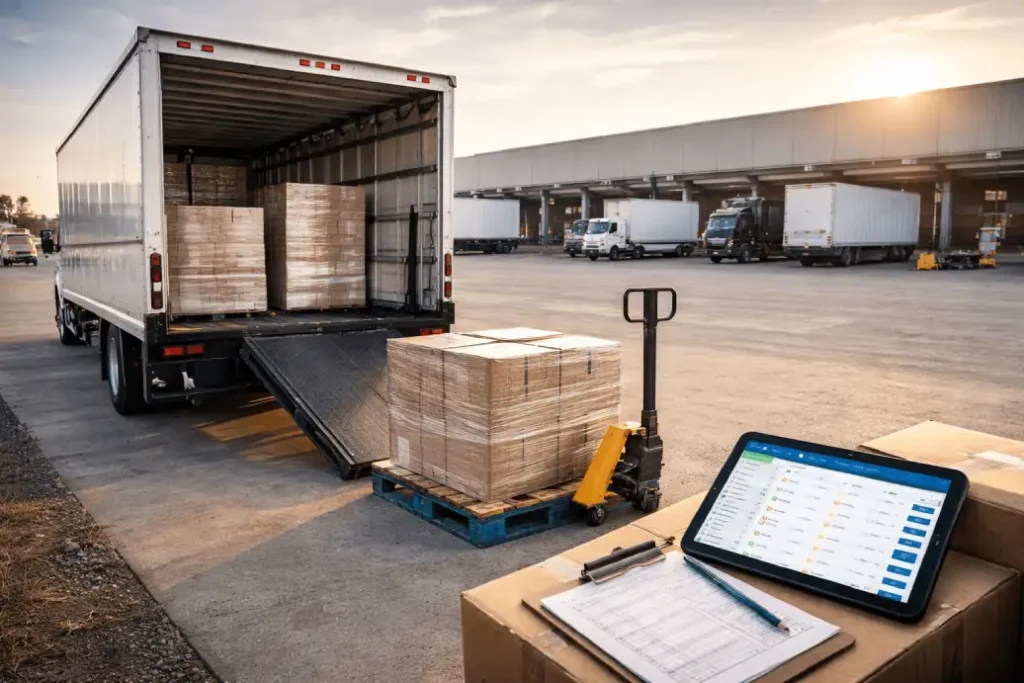
The demand side is still moving. Reuters reported that FedEx launched a same-day local delivery product in March 2026 through OneRail and its network of more than 1,000 delivery providers. Reuters also reported that Amazon expanded one-hour and three-hour delivery in U.S. cities. The U.S. Postal Service opened a bidding platform to widen access to its last-mile network. That is not proof that every box truck owner operator will make more money. But it is proof that local and regional delivery capacity is still strategically important, and that matters to the box truck business.
Here is the catch nobody likes saying out loud: more activity in the box truck market does not automatically mean more profit for a box truck owner operator. Sometimes it means tighter appointment windows, more unpaid waiting, more multi-stop hassle, and more scorecard pressure. Supply Chain Dive noted that last-mile delivery costs are still climbing in 2026, and that gives shippers even more reason to squeeze carriers on service and price. So yes, the box truck business can get busier while the box truck owner operator gets more tired and not much richer. That is why the money discussion has to be practical, not emotional.
What your earnings really depend on
What a box truck owner operator can gross is one question
What a box truck owner operator can keep is the real one
Let’s separate two things people mix up all the time.
A box truck owner operator can post a nice gross week and still run a weak box truck business. That happens every day. A box truck owner operator can also have a lower-looking gross week and still come out ahead because the miles were cleaner, the timing was better, and the truck stayed in a stronger reload area. The box truck market rewards efficiency more often than it rewards pure movement.
Public market signals help frame this. BLS said the median annual wage for light truck drivers was $44,140 in May 2024. That is employee pay, not owner pay, but it gives you a useful floor for what a driver might make without truck ownership risk. On the owner side, DAT says earnings can vary widely based on truck size and workload, and 2026 job listings for 24-foot and 26-foot box truck work have regularly advertised weekly gross numbers around $5,000 to $8,000 on busy OTR setups. That is exactly where many new people get fooled. Those numbers are gross, not net. And posted job ranges often show good weeks, not average weeks across a real year in the box truck market.
From our seat, the honest way to answer the money question is to break a box truck owner operator into three rough buckets.
A struggling box truck owner operator in the current box truck market may gross about $2,500 to $4,000 in a weak or inconsistent week. That usually happens when the box truck business has poor lane discipline, too much dwell time, bad reload planning, or too much dependence on cheap freight off box truck load boards.
A steady box truck owner operator can often gross about $4,500 to $6,500 in active weeks if the truck stays loaded, empty miles are controlled, and the freight mix matches the truck and region. This is where a lot of healthy one-truck box truck business operations actually live, even if nobody brags about it.
A strong box truck owner operator can sometimes gross $6,500 to $8,500 or more in good weeks, especially in expedite, white-glove, route-heavy, or liftgate-sensitive work. But those weeks are not random. They usually come from a repeatable process, better customer mix, better appointment management, and smarter choices on box truck load boards.
The mistake is annualizing one lucky week. A box truck owner operator who hits $7,000 on a hot week does not suddenly have a $364,000 box truck business. Real life has breakdowns, chargebacks, slow weeks, rejected freight, deadhead home, insurance renewals, and days when the truck simply does not reload the way you planned. That is why a serious box truck owner operator should build yearly expectations backward from utilization, not forward from best-case bragging.
Where the money leaks out of a box truck business
This is the part that decides whether a box truck owner operator is building something solid or just staying busy.
ATRI’s 2025 operational cost update said the industry’s average cost of operating a truck in 2024 was $2.26 per mile, while non-fuel costs climbed to a record $1.779 per mile when fuel was excluded. A box truck owner operator does not match the exact profile in a long-haul heavy truck report, but the direction matters a lot. The box truck business is not operating in some safe little bubble where costs stay low. Equipment, labor, parts, financing, and insurance are all pressing on margins. ATRI also reported that insurance costs hit another record in 2024, which lines up with what smaller carriers were still feeling in 2025 and 2026. Read more about The Rebirth of the Small Carrier: Why Fleets Under 10 Trucks Are Gaining an Edge.
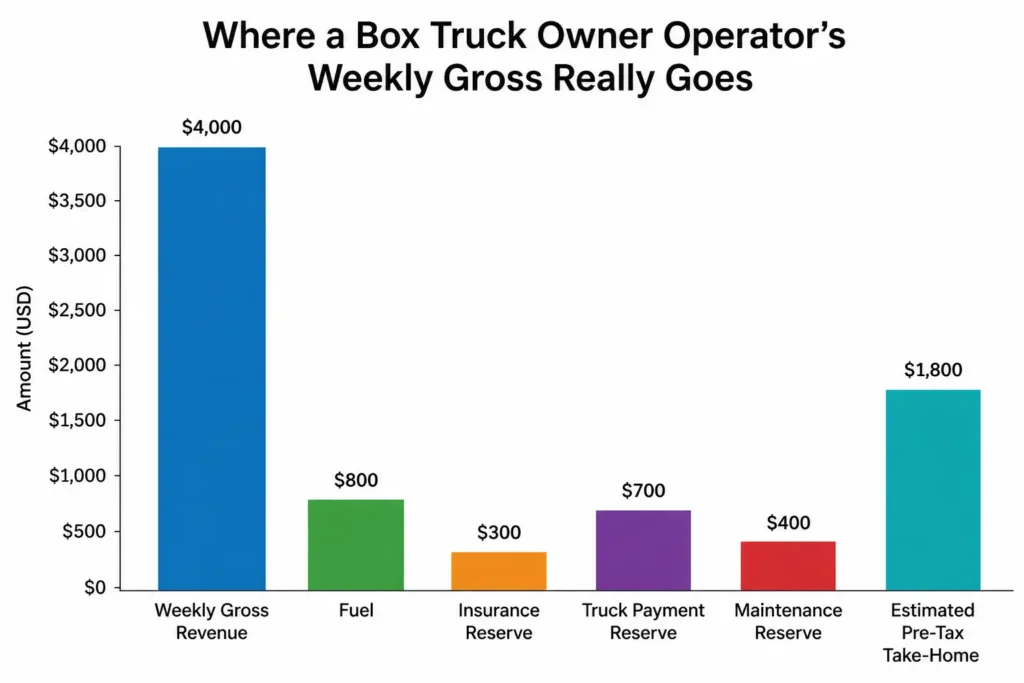
Fuel still matters too, even when a box truck owner operator is more local or regional. EIA’s June 16, 2026 diesel release showed current national pricing, and its short-term outlook projected average diesel prices around $3.40 per gallon for 2026. That is not catastrophic by itself. But in a weak-paying lane, even moderate fuel pressure can turn a decent-looking trip into a bad business decision. A box truck owner operator who watches only gross and ignores loaded miles versus total miles is not really tracking profit. In the box truck market, bad deadhead habits will eat more money than most people think.
Insurance is where many new operators get punched in the mouth. Box truck insurance ranges vary a lot by radius, unit size, commodity, authority age, and claim history. Several 2026 insurance sources put established box truck policies broadly in the $6,000 to $18,000 annual range, while some last-mile fleets reported lower bands and some metro-area new ventures reported much worse quotes. So when a new box truck owner operator says, “I’ll figure insurance out later,” what they usually mean is the box truck business is about to get its first ugly surprise.
Then there are the quiet leaks that almost never get mentioned in public numbers. Truck payment. Maintenance reserve. Tires. Liftgate repair. Helpers. Parking. Tolls. Factoring. Claims. Redelivery attempts. Food. Taxes. Accounting. Dispatch fee. ELD cost if the setup requires it. The box truck owner operator who survives long term usually gets stubborn about these details fast. The weak box truck business keeps talking only about what one load paid.
That is why we push drivers toward net-per-day thinking. In the box truck market, too many loads are sold as if the miles tell the full story. They do not. City freight, appointment freight, and multi-stop freight are time problems first. A box truck owner operator can drive only 170 paid miles in a day and still have a strong day if the stops are smooth and the pay is right. Another box truck owner operator can run 420 miles, wait half the day, burn fuel, and finish with a much weaker result. The box truck business that understands time tends to read the box truck market better.
A simple example makes it clearer. If a box truck owner operator grosses $5,500 in a week, that does not mean the box truck business made $5,500. After fuel, insurance accrual, truck payment accrual, maintenance reserve, dispatch or factoring cost, tolls, and other drag, that same week can feel more like $2,000 to $3,200 before taxes. Throw in a repair, claim, or helper cost, and the number can shrink fast. We have watched more than one box truck owner operator learn that lesson the painful way.
The mistakes that make a box truck owner operator feel broke
Some weak earnings are pricing problems. Some are operational problems wearing a pricing costume.
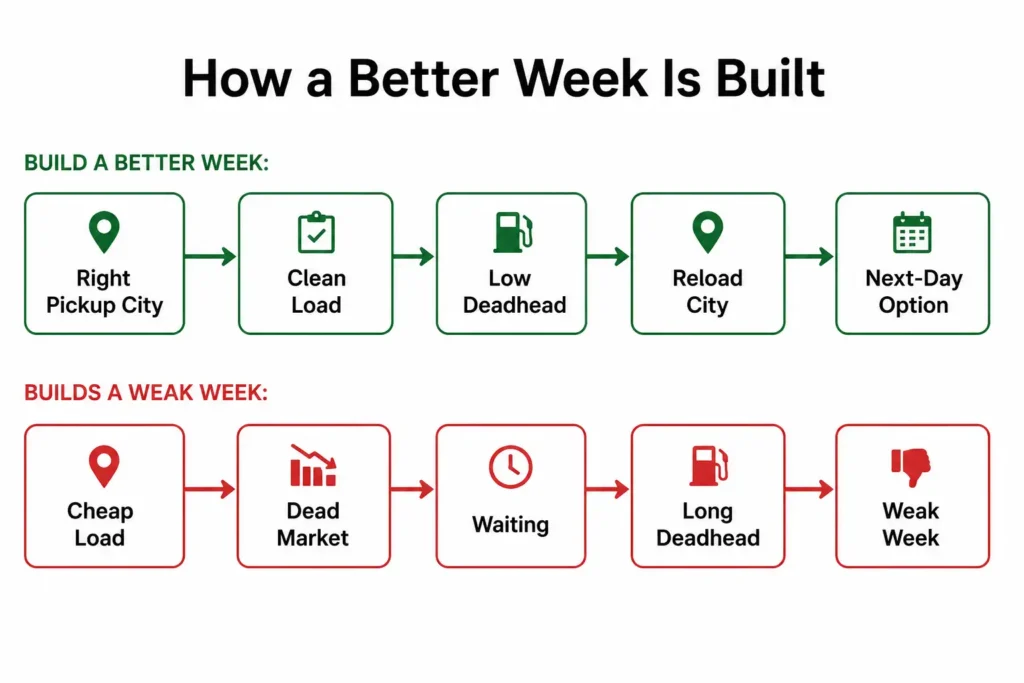
The first killer is bad sequencing. A box truck owner operator should never judge a load by Monday alone. If Monday puts the truck in a dead area on Tuesday, Monday probably was not good. A healthy box truck business thinks in chains, not snapshots. The box truck market often pays the second move more than the first one.
The second killer is lazy deadhead. A box truck owner operator has to know the difference between smart repositioning and emotional chasing. This is where box truck load boards can be dangerous. Drivers get nervous when the truck is empty, accept weak freight just to feel motion, and then spend the margin getting back to a better city. That is not one bad load. It is really two bad loads: the load you underpriced and the recovery move you now have to buy.
The third killer is commodity mismatch. Not every box truck owner operator should touch every commodity they see on box truck load boards. Furniture can pay better and still destroy your week with claims. Multi-stop retail can look simple on paper and turn into curbside chaos downtown. Medical expedite can pay sharply but punish any slip in timing or document handling. A smart box truck business learns what kind of service it is actually built to perform.
The fourth killer is paperwork sloppiness. In 2026, a box truck owner operator cannot treat paperwork like an afterthought. Late POD uploads, missing signatures, bad BOL photos, weak detention notes, or wrong consignee contact info can delay payment or kill a claim. Brokers and platforms are more automated than they were a few years ago, and the box truck market does not have much patience for avoidable admin mistakes. A box truck business that treats paperwork as part of the load usually keeps more money.
The fifth killer is poor compliance awareness. FMCSA says companies hauling cargo in interstate commerce must register and get a USDOT number, and that requirement includes vehicles with a GVWR or actual weight of 10,001 pounds or more in interstate commerce. FMCSA also lays out the property-carrying HOS structure, including the 11-hour driving limit, 14-hour window, 30-minute break, and 60/70-hour rule, unless a short-haul exception applies. Cargo securement rules still apply as well. So a box truck owner operator who thinks, “It’s just a box truck, not a semi,” can still get the box truck business into trouble if the rules are treated casually.
Why box truck load boards matter, and why they are not enough
Let’s be fair. Box truck load boards still matter.
A new box truck owner operator usually needs box truck load boards to get moving, fill holes in the week, test markets, and build familiarity with brokers, shippers, and reload cities. A box truck business without customer depth often cannot survive early-stage growth without some dependency on box truck load boards.
But box truck load boards are not a strategy by themselves. They are only a marketplace. The box truck owner operator still needs judgment, search discipline, and patience.
The upside is obvious. Box truck load boards help a box truck owner operator see opportunity fast, move on short notice, and learn what the box truck market is paying by lane and timing.
The downside is more important. Box truck load boards train bad habits when people mistake visibility for value. The cheapest freight is usually the easiest freight to find. The better freight often goes earlier, gets covered by repeat carriers, or sits under a broader equipment label. A box truck owner operator who searches only the exact phrase they want on box truck load boards misses partials, dry van leftovers that fit a straight truck, final-mile overflow, route add-ons, and broker freight that was posted badly.
Then there is the pressure effect. A box truck owner operator sitting empty at noon starts negotiating against himself. The box truck business gets emotional. Suddenly the goal becomes movement instead of margin. That is why the best use of box truck load boards is often not about calling faster. It is about knowing when a no is better than a weak yes.
We tell drivers not to blame box truck load boards for every bad week. Usually the board is not the full problem. More often it is a poor lane plan, bad call timing, weak broker filtering, or an operator who never built a system beyond refreshing the app. The box truck market pays systems more than it pays hustle.
How a box truck dispatch service changes the outcome
This is where dispatch either earns its percentage or does not deserve it.
A real box truck dispatch service does more than send load options. A real box truck dispatcher thinks about sequencing, timing, customer behavior, broker credit, margin leaks, delay recovery, and what the truck should do after the current load, not just on the current load.
A good box truck dispatcher protects a box truck owner operator from bad yeses. That sounds simple, but it saves a lot of money. A cheap downtown multi-stop mess, a no-parking retail load, a weak broker, or a nice-looking lane into a dead reload area can quietly damage a box truck business faster than one obvious disaster. We often earn our keep on the loads we tell a box truck owner operator to skip.
A good box truck dispatch service also searches wider. A sharp box truck dispatcher does not rely only on the obvious equipment tag. A sharp box truck dispatcher watches partials, dry van leftovers, posted-truck visibility, local same-day possibilities, and the next reload area before the current trip is even booked. In the box truck market, the second move often matters more than the first.
A strong box truck dispatch service negotiates details, not just the top line. Liftgate money. Inside delivery rate. Reattempt terms. Detention. Better pickup time. Cleaner delivery appointment. These are not side details. They are margin. A box truck owner operator feels those details much more clearly than a flashy gross line.
This is also where support matters when the day goes sideways. When a pickup is late, a receiver is closed, weather turns ugly, or the box truck owner operator has to stop, a box truck dispatcher can rebook the next load, update the broker, reset appointments, document delay notes, and help the driver find safe parking or decide on a better stoppage point. That matters because one delay can ruin two days if nobody is working the phone. In a messy box truck market, fast recovery is part of earnings.
Paperwork is another area where a box truck dispatch service saves real money. POD collection. BOL review. Delay documentation. Detention requests. Claim photos. Accessorial follow-up. A box truck owner operator who does all of that alone after a long day is more likely to miss something. A box truck dispatcher gives the box truck business a second set of eyes when memory and patience are already low.
There is also a simpler truth. A good box truck dispatch service brings discipline. A good box truck dispatcher helps a box truck owner operator act like a business owner on tired days. That means fewer panic bookings, tighter lane rules, cleaner communication, and better weekly review. The box truck market rewards boring discipline far more often than dramatic hustle does.
From the Dispatch Republic side, that is the real selling point. The right box truck dispatch service should not only keep a box truck owner operator loaded. The right box truck dispatch service should help the box truck business keep more of what it earns. That means smarter route selection, better broker communication, cleaner paperwork, faster rebooking when things break, and practical guidance when the driver needs to stop safely. Read more about The Real Difference Between Average and High-Performing Truck Dispatch Services.
Two real patterns we keep seeing from the dispatch desk
Here is one pattern we see a lot.
A new box truck owner operator buys a truck, gets authority, pays a rough insurance deposit, and jumps straight into box truck load boards full time. The first two weeks look decent. Then the driver starts reaching too far because the home region feels slow. The truck ends up in weak reload cities. Fuel climbs. Waiting time climbs. Stress climbs. The box truck business starts covering one bad choice with another bad choice. Nothing dramatic happened. The box truck owner operator just never built a repeatable week.
Here is the other pattern.
Another box truck owner operator starts tighter and more boring. The truck stays in a smaller region. The driver learns three or four reload cities. The truck gets picky about stop count, liftgate need, and downtown pain. A box truck dispatch service tracks which brokers are worth a call back and which ones waste half a day. The box truck dispatcher rebooks quickly during delays, handles shipper communication, keeps documents moving, and steers the driver away from junk that only looks good for fifteen minutes on box truck load boards.
We trust the second pattern more. Not because it sounds better in a sales video. Because it behaves better in the real box truck market.
So how much can a box truck owner operator earn?
The honest answer is wide, and that is why vague answers are useless.
A box truck owner operator can earn too little and stay stressed. A box truck owner operator can earn a decent middle-class living. A box truck owner operator can also build a solid one-truck box truck business with real upside. The difference usually comes down to lane discipline, cost control, service quality, paperwork quality, and whether the truck is being run like a business or like a chase.
If you want a practical takeaway, use this one: stop asking only what the best week looks like. Ask what the average month feels like after fuel, insurance, downtime, claims risk, and home time. Ask which lanes actually reload. Ask which broker relationships are worth building. Ask whether your current box truck load boards habits are helping or hurting. Ask whether a box truck dispatch service would save more in mistakes than it costs in fees.
That is the conversation that makes a box truck owner operator profitable in the real world.
And if you are tired of spending half your day refreshing box truck load boards, calling weak brokers, fixing late appointments, and doing paperwork after dark, that is exactly where a serious box truck dispatch service can help. A serious box truck dispatcher can rebook freight when a load falls apart, adjust routes when the box truck market shifts, handle broker and shipper communication during delays, document paperwork properly, and point the driver toward a safer stop when the day gets messy.
At Dispatch Republic, we do not think a box truck owner operator needs more noise. You need cleaner planning. You need better load quality. You need support that protects your time and your net. If you want help building a steadier box truck business in a difficult box truck market, with fewer preventable mistakes and smarter weekly decisions, we are ready to help.
If you’re an owner-operator hauling specialized freight, don’t go it alone. Explore Dispatch Republic’s reefer truck dispatch services and power only dispatch services to access top-paying loads and compliance support. Check out our car hauling dispatch services and blog for more tips. Our dispatchers are experts in car hauling loads, flatbed loads, and reefer loads – we can match your truck to the best freight and handle the paperwork. Let us help you keep your rig loaded, safe, and legal.
For a deeper dive into the hotshot hauling business, read our Box Truck vs. Dry Van: Which Is Better for Your Business? and Step Deck vs. Flatbed: Which Is Right for Your Fleet?
Ready to make the most of your trucking business? 🚚💨 Reach out to Dispatch Republic and let our experts help maximize your earnings with tailored hotshot dispatch service and dry van dispatch service solutions. We’ll handle the logistics while you keep on truckin’. Contact our truck dispatch service to get started on the road to greater profits and less hassle!
For more detailed guides, check Dispatch Republic’s resources on dispatching and the trucking business. Recent FMCSA Rule Changes for Immigrant CDL Holders if you’re weighing career paths, and Hotshot Dispatch and Compliance: Key Regulations Every Dispatcher Should Know to understand the dispatch side of the business.
If you’re an owner-operator juggling multiple responsibilities, consider partnering with a professional truck dispatch service to take the load off your shoulders—literally. At Dispatch Republic, we specialize in helping carriers run smarter and earn more by expertly managing load boards, negotiating top rates, and handling paperwork for dry vans dispatch service, reefers dispatch service, flatbeds dispatch service, box trucks dispatch service, step decks dispatch service, hotshots dispatch service and even car hauler dispatch services. Our team monitors multiple premium load boards around the clock, ensuring your truck stays loaded with the right freight, at the right rate, on the right lane. Whether you’re scaling up or just getting started, having a dedicated dispatch team in your corner means fewer empty miles, less stress, and more time to focus on driving and growing your business.
Frequently Asked Questions
How much can a box truck owner operator earn in 2026?
A box truck owner operator can land anywhere from survival income to a strong six-figure gross, depending on lane mix, downtime, cost structure, and how the box truck business is run. In the current box truck market, the better question is what the box truck owner operator keeps after expenses. A weak week on box truck load boards can look active and still lose money. A disciplined week managed with help from a box truck dispatch service or a sharp box truck dispatcher can produce a better net.
How does the best hotshot dispatcher use hotshot load boards differently?
Yes, the box truck business can still be profitable, but only if the box truck owner operator respects cost control and accepts that the box truck market is not forgiving. The box truck business that wins usually knows its lanes, uses box truck load boards carefully, keeps paperwork tight, and gets support from a box truck dispatch service when needed.
Are box truck load boards enough for a new box truck owner operator?
Box truck load boards are useful, especially early, but they are not enough by themselves. A box truck owner operator can learn a lot from box truck load boards, yet the box truck business grows faster when the operator also builds broker relationships, tracks reload cities, and understands which corner of the box truck market actually fits the truck. A box truck dispatcher can often see better sequence decisions than a tired driver can.
What does a box truck dispatch service do for a box truck owner operator?
A box truck dispatch service helps a box truck owner operator find better freight, negotiate appointments and extras, rebook loads when delays happen, handle broker and shipper communication, manage paperwork, and keep the box truck business from getting trapped by weak decisions. A good box truck dispatcher also helps the driver avoid low-quality freight on box truck load boards.
How does a box truck dispatcher improve earnings in the box truck market?
A box truck dispatcher improves earnings by protecting the box truck owner operator from weak load sequences, spotting better reload paths, tightening document flow, and giving the box truck business more structure. A good box truck dispatcher uses box truck load boards as one tool, not the whole plan, and that usually leads to better decisions inside the box truck market.
What costs hurt a box truck business the most?
For many operators, the biggest pain points are insurance, downtime, truck payments, maintenance, fuel, claims, poor paperwork, and weak load choices. A box truck owner operator can stay busy on box truck load boards and still hurt the box truck business if the wrong freight is accepted. That is why a box truck dispatch service and a careful box truck dispatcher often pay for themselves by preventing bad weeks, not just by finding good ones.
Ready to Take Your Trucking Career to the Next Level?
Whether you’re an owner-operator, a company driver, or a carrier company in need of truck dispatch services, Dispatch Republic is here to help. Our team of experienced truck dispatchers offers affordable, professional truck dispatch solutions designed to save you time, increase your earnings, and make your business more efficient.
Thinking about outsourcing your truck dispatching? Contact Dispatch Republic today and move smarter, not harder.
Found our Blog useful? Spread the word:
Check our latest posts:


Contact us today to see how our team can support your trucking business.