

Table of contents
You can run safe, legal trucks every day and still lose freight in 2026. One stolen identity, one wrong phone number in your FMCSA file, one rushed booking, or one report inside a broker’s vetting system can get your company pushed to the side while a bad actor keeps moving under a cleaner mask. That is why the double brokering crackdown matters now, why every Chameleon Carrier matters now, why freight frauds are not just a broker problem, and why FMCSA enforcement has become a daily business issue for hardworking fleets that are simply trying to haul freight and get paid. Industry reporting this spring said just over half of owner-operators responding to one Overdrive poll had already been hit by some form of fraud, which tells you this is no longer rare background noise.
From the dispatch side, we see the same pattern again and again. A carrier does the work right, but a scammer changes contact details, spoofs an email, books freight under a stolen MC, or slips into the load through a weak vetting step. Then the real carrier deals with the fallout: delayed onboarding, broker blacklists, payment holds, extra deadhead, and lost reloads. The double brokering crackdown is tightening, the Chameleon Carrier playbook is getting more sophisticated, freight frauds are moving faster, and FMCSA enforcement is finally catching up, but honest fleets still need a cleaner operating system on their end if they want to stay bookable.
Why this is costing good fleets money
The problem is bigger than one stolen load
The size of the fraud wave is no longer guesswork. TIA said its most recent fraud report covered nearly 1,600 fraud cases from September 2024 through February 2025, and Highway said it detected almost 400,000 fraud attempts in the first quarter of 2025 alone. Truckstop said it reviewed more than 63,000 entities in 2025, saw more than 14,000 identity-check failures during RMIS carrier onboarding, denied 5,525 accounts on qualification or authority issues, and investigated more than 600 reported fraud cases. That means the double brokering crackdown is real, but it also means the threshold for trust is higher. A Chameleon Carrier can make brokers tighten their rules on everyone. Freight frauds make clean owner-operators answer more questions. FMCSA enforcement makes accurate records more valuable than ever.
The quiet cost of a bad flag
The hidden cost is not always a stolen load. Sometimes the cost is being quietly marked as risky. A carrier may never receive a formal letter saying it is on a blacklist. It just stops getting approved, or a broker suddenly asks for extra proof, or a vetting team says the file does not match. In that environment, the double brokering crackdown helps the market, but it can also punish slow paperwork. A Chameleon Carrier makes everyone suspicious. Freight frauds create false positives. FMCSA enforcement rewards the carriers that can prove, quickly and clearly, who they are and how they operate.
From a practical standpoint, honest fleets should think about this in three buckets. First, a bad carrier can steal your identity. Second, a bad broker or fake broker can pull you into a bad deal. Third, a mistaken flag can choke off revenue if you respond too slowly. The double brokering crackdown addresses the first two, but a good response to a Chameleon Carrier threat also protects you from the third. Freight frauds spread through confusion. FMCSA enforcement now puts more weight on verified identity, clean company records, and traceable communication.
Vehicle transport demands different coordination, especially with multiple pickups and deliveries. Many operators rely on organized car hauler dispatch services and integrated auto transport dispatch to maintain stability across jobs.
What a Chameleon Carrier is really doing
It is often not one truck, one company, or one lie
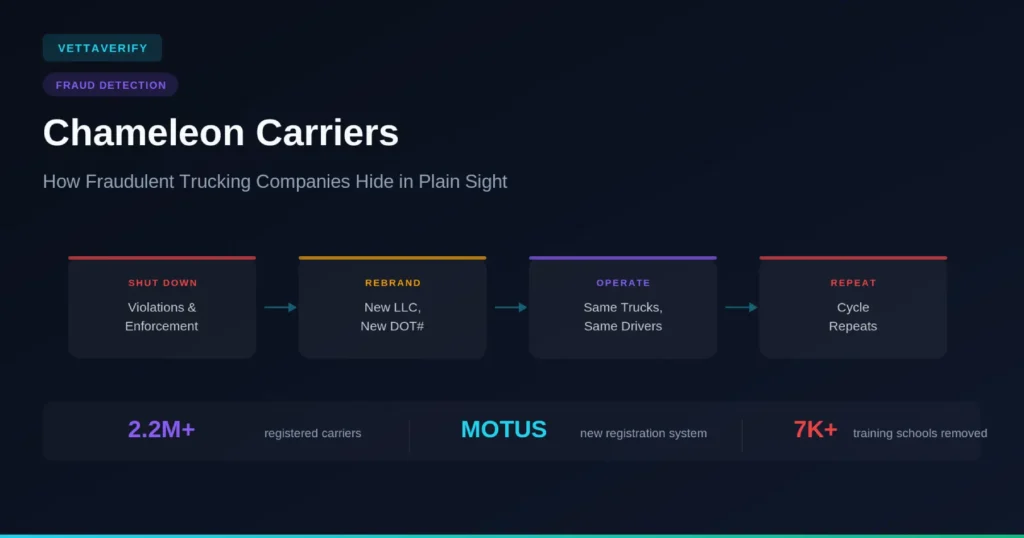
A lot of fleets still picture a bad actor as one company that shuts down after a bad crash and comes back under a new name. That still happens. But the smarter version of a Chameleon Carrier can be a network. It may run several DOT numbers at the same time, use shared addresses, recycle equipment, switch freight between authorities, or move traffic to a cleaner number when one number starts getting hot. That is why the double brokering crackdown cannot focus only on one fake booking. A Chameleon Carrier often behaves like a cluster, not a single reincarnation. FMCSA leaders and recent industry summaries have described exactly that shift.
That detail matters for honest fleets because the market reacts to patterns too. Broker vetting teams look for contact overlap, address overlap, suspicious authority history, inactive insurance, fast changes in public records, and mismatched dispatch communications. When the double brokering crackdown gets stricter, a Chameleon Carrier does not only hurt safety. It changes how trust gets measured. Freight frauds teach brokers to distrust shortcuts. FMCSA enforcement is now moving closer to the front door of registration, not only the back end of crash review.
Why honest carriers pay for somebody else’s game
There is another uncomfortable truth. A Chameleon Carrier does not only hurt the public. It hurts rate discipline and reputation for everyone else. If a bad actor dodges claims, avoids insurance pain, hides chargebacks, and keeps reappearing, that bad actor can quote freight below a responsible fleet’s real cost. The double brokering crackdown is partly a safety issue, but it is also a fairness issue. A Chameleon Carrier can undercut a real carrier. Freight frauds raise premiums and distrust. FMCSA enforcement is one of the few tools that can push the market back toward honest pricing.
What changed in 2025 and 2026
Identity is now part of compliance
The strongest signal in 2025 and 2026 is that federal attention moved from talking about fraud to rebuilding the systems that let fraud spread. FMCSA now requires identity proofing for new registration applicants, and the Motus registration modernization effort says identity verification, business validation, and secure electronic processes are part of the redesign. That is a direct response to the same weak spots used by a Chameleon Carrier. The double brokering crackdown gets stronger when identity is checked before freight ever hits a dock. Freight frauds get harder when business validation gets cleaner. FMCSA enforcement becomes more effective when the file itself is harder to fake.
Ghost offices and shell structures are getting more attention
The second big change is the push against ghost offices and fake principal places of business. DOT said carriers must have a physical location where records can be inspected within 48 hours, and agency leaders tied that move directly to the effort to unmask chameleon networks. DOT’s own 2026 handout also said the next steps include “no more ghost offices” and shutting down Chameleon Carrier networks that use fraud and shell companies. For honest fleets, this is not abstract. The double brokering crackdown now reaches your office file, your address, and your records access. A Chameleon Carrier often hides behind mailbox logic. Freight frauds love vague locations and recycled contacts. FMCSA enforcement is moving straight at that weakness.
Broker rules are starting to matter more to carriers too
The third big change is broker oversight. FMCSA’s broker and freight forwarder financial-responsibility rule became effective in 2026 and strengthens how the agency handles broker security requirements. At the same time, FMCSA’s broker transparency proposal says transaction records should be provided electronically within 48 hours of request, and the agency explicitly said that better transparency could help carriers detect unauthorized brokering, challenge abusive chargebacks, and improve self-policing in brokered freight transactions. That matters because the double brokering crackdown is not only about who books a load. It is also about who controls the paper trail after the load is delivered. A Chameleon Carrier loves murky records. Freight frauds grow in information gaps. FMCSA enforcement is trying to reduce those gaps.
There is still a limit here. FMCSA told Congress in its unlawful brokerage report that enforcement of unauthorized brokerage has been complicated by legal and procedural limits, especially where civil penalties must move through the Department of Justice rather than easy in-house action. So nobody should think the double brokering crackdown is finished or that every Chameleon Carrier will disappear overnight. Freight frauds still move quickly because criminals exploit speed, silence, and jurisdiction gaps. FMCSA enforcement is stronger than it was, but honest fleets still need to protect themselves before a case ever reaches Washington.
How broker blacklists actually work
Most blacklists are private, layered, and hard to see from the driver seat
Most blacklists are not one government list. They are the result of broker TMS notes, carrier-vetting platforms, DNU statuses, fraud reports, insurance monitoring, and private risk scoring. Carrier411 says more than 3,000 brokers and shippers use its platform every day, including 97 of the top 100 brokers by net income, and it also says FreightGuard reports are customer-submitted opinions and experiences, not government findings. That distinction matters. The double brokering crackdown has pushed brokers to document more problems faster. A Chameleon Carrier deserves that scrutiny, but an honest carrier should understand that private risk systems are not the same thing as a formal legal finding. Freight frauds have made those systems more aggressive. FMCSA enforcement sits beside them, not above every single decision they make.
For honest fleets, the hard lesson is that private memory can last longer than your explanation. Carrier411 says reports older than 72 hours can still remain visible to customers even when deleted and says that permanent visibility is meant to protect brokers and shippers. It also added more detailed report categories tied to DNU status, identity theft, dispatch behavior, and unauthorized re-brokering. So if your company gets caught in the middle of the double brokering crackdown, speed matters. If a Chameleon Carrier stole your identity, you need to document that immediately. If freight frauds touched your file, you need timestamps, screenshots, and corrected records fast. FMCSA enforcement may help later, but your first defense is the paper trail you build in the first day.
Dispatch behavior can now trigger the same risk systems
There is also a dispatch angle that fleets should not ignore. One FreightGuard category is literally “Dispatch Service Issues,” and it includes overbooking, assigning a load to a different carrier, communication problems, and double brokering by a dispatch service that is not really affiliated with the carrier it claims to represent. That means the double brokering crackdown can hit a fleet through its own back office. A Chameleon Carrier may use sham dispatch behavior as cover. Freight frauds often enter through mismatched communication. FMCSA enforcement does not excuse sloppy dispatching, and honest carriers should not excuse it either. If your dispatcher cannot show clear authority, clean documentation, and a consistent contact chain, you are giving brokers a reason to say no.
A real-world example shows how rough this can get for good operators. In early 2025, Overdrive reported that owner-operators using legal but less common setups, including glider kits and paper logs, said some big broker customers moved to a newer vetting platform and effectively locked them out of freight. That does not mean those owner-operators were fraudulent. It means the double brokering crackdown can create collateral damage if systems lean too hard on automated patterns. A Chameleon Carrier makes those automated systems feel necessary. Freight frauds make brokers less patient. FMCSA enforcement may improve the baseline, but clean fleets still need active reputation management, not passive hope.
In general freight operations, structured dry van dispatch services combined with consistent dry van freight dispatch often keep trucks moving regularly with minimal idle time.
Why fuel spikes still matter in a fraud story
Fraud is the headline, but fuel is the reminder that honest fleets operate with very little room for error. This is where the topic overlaps with a second risk that matters to dispatchers and owner-operators: conflict-driven diesel spikes. Historical data from Iraq, Syria, and the more recent 2025 Iran shock all show a similar pattern. Crude can jump fast on supply fear. Retail diesel usually follows with a lag and with less drama. Then, if the panic cools, both can slide back. The lesson is simple. When the double brokering crackdown makes booking slower and margin protection more important, a Chameleon Carrier is not the only thing that can damage your week. Freight frauds steal loads; fuel shocks steal cushion. FMCSA enforcement does not change crude markets, so fleets still need weekly discipline on fuel.
In the Iraq invasion period of 2003, WTI crude ran up to $37.76 on March 7 and then fell to $27.18 by March 21, while U.S. on-highway diesel climbed from $1.492 on January 27 to $1.771 on March 10 and then eased to $1.508 by April 28. In the Iraq-Syria security shock of 2014, WTI moved from $103.40 on May 30 to $107.95 on June 20 and then dropped to $92.43 by September 19; diesel moved much more mildly, from $3.892 on June 9 to $3.920 on June 30 before easing to $3.755 by September 29. In June 2025, the IEA said benchmark crude rose about $7 a barrel on average during the month, briefly crossed above $80 on conflict headlines, and returned toward pre-conflict levels after a ceasefire, while U.S. diesel went from $3.471 on June 9 to $3.775 on June 23 before easing to $3.727 on June 30. That is the spike-and-decay pattern in plain English.
The practical takeaway is not to panic-book fuel assumptions for six months. It is to tighten weekly controls. Watch crude direction, but price freight off your real diesel number. Build a small buffer into spot quotes on weeks when oil is moving hard. Push for better fuel surcharge clarity on repeat freight. Avoid cheap reloads that only work if diesel drops next week. The double brokering crackdown teaches discipline. A Chameleon Carrier survives on sloppy checks. Freight frauds survive on rushed decisions. FMCSA enforcement helps clean the market, but it does not replace weekly cost control.
Here is the short pattern honest fleets should remember. The 2003 Iraq invasion produced a fast crude run-up and a softer but real diesel rise, then both faded through spring. The 2014 Iraq-Syria shock showed that pump diesel usually lags crude and often moves less than the headline oil market suggests. The 2025 Iran shock showed the same thing again: crude spiked quickly, diesel followed, and both eased once the immediate fear cooled. For carrier budgeting, that means cash buffers and weekly load-pricing discipline matter more than emotional forecasting.
How Dispatch Republic keeps honest fleets moving
A dispatcher now has to protect identity, not just find freight
A good dispatch company does much more than find a load. In a market shaped by the double brokering crackdown, your dispatcher should be protecting identity, revenue, compliance, and your next reload all at once. That means verifying broker authority before booking, matching every rate confirmation to the correct MC and contact trail, checking that pickup instructions were not changed through spoofed email, and documenting who authorized every load handoff. If a Chameleon Carrier thrives on confusion, your dispatcher’s first job is to remove confusion. If freight frauds thrive on gaps, your dispatcher’s job is to close gaps. FMCSA enforcement is moving in this direction, and your back office should move there too.
That protection continues after pickup. If a broker suddenly changes the delivery number, if a factoring notice no longer matches your past payment history, or if someone asks the driver to drop in a yard that was not on the original chain, the dispatcher should stop the drift before it becomes a claim. This is where real dispatch value shows up. The double brokering crackdown is not only about saying no at setup. It is about controlling the trip after the load moves. A Chameleon Carrier often relies on last-minute changes. Freight frauds often hide inside urgency. FMCSA enforcement helps more when the carrier can show a clean timeline of decisions.
Re-booking, safe stops, documents, and delay control
This is also where delay handling matters. When a load is held for re-verification, a good dispatcher re-books the next load, adjusts the route to cut deadhead, keeps the broker and shipper updated, manages detention paperwork, confirms revised appointment times, and tells the driver where to find safe parking if the trip must stop. Honest fleets lose money when paperwork is scattered. The double brokering crackdown raises the odds of extra checks. A Chameleon Carrier makes those checks necessary. Freight frauds can turn a simple delay into a payment dispute. FMCSA enforcement cannot save a carrier that failed to save its own documents.
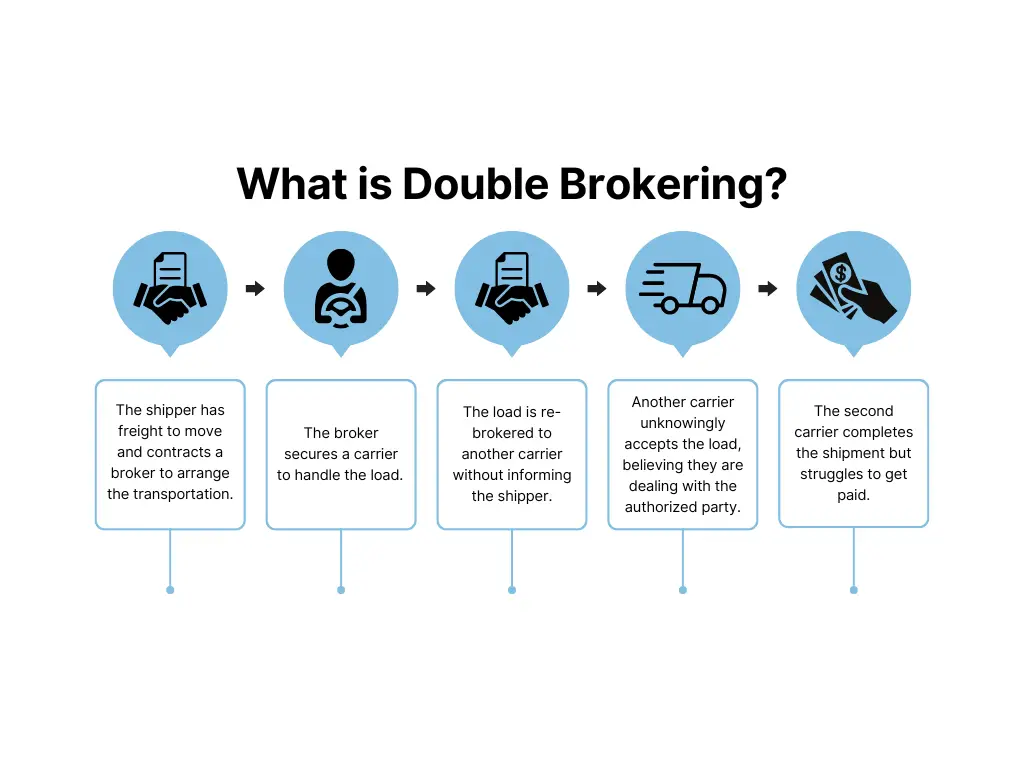
A second real-world scenario makes this clear. Imagine a small dry van fleet whose public FMCSA email was changed by a scammer. A broker sees a mismatch between the building address, the booking email, and the insurance certificate trail and freezes a high-value load. A weak dispatcher argues and makes it worse. A strong dispatcher does the opposite. They pause movement, confirm the official record, help the carrier update the portal, send corrected onboarding documents, notify the insurance side, preserve the screenshots, and start re-booking legal freight so the truck does not sit empty two days. That is the kind of support carriers need now. The double brokering crackdown rewards carriers that can prove control. A Chameleon Carrier counts on chaos. Freight frauds count on panic. FMCSA enforcement becomes far more useful when the carrier already did the first hour of damage control correctly.
What honest fleets should do this week
Start with your own public records. Confirm the business address, company official, phone numbers, and email addresses tied to your FMCSA records and portal access. Prepare for Motus before it is forced on you. If you use a dispatcher, make sure that dispatcher is clearly authorized, uses your real company identity, and never books under a loose or borrowed chain of communication. The double brokering crackdown starts with basic housekeeping. A Chameleon Carrier often wins because a good carrier assumed its old records were fine. Freight frauds often start with outdated contact details. FMCSA enforcement is moving toward identity-first compliance, so your records need to be tight.
Next, tighten your booking rule set. Do not accept phone-only changes to delivery instructions. Call back numbers you source independently. Verify broker authority, not just a logo on an email. Confirm insurance directly when a load looks high risk. Limit who can release fuel card details, banking details, and EIN documents. The double brokering crackdown works best when everyone in your company follows the same steps every time. A Chameleon Carrier looks for the one rushed employee. Freight frauds look for the one skipped callback. FMCSA enforcement cannot fix bad habits in your office.
Finally, respond fast when something smells wrong. Save screenshots. Save headers. Save revised rate confirmations. Notify the broker, insurer, factor, and load platform if identity theft is involved. Use official FMCSA channels, not random notices asking for urgent documents. FMCSA’s fraud alert pages show that scammers have been impersonating the agency and requesting EIN letters, insurance documents, company-formation papers, and driver’s-license copies. The double brokering crackdown will help honest fleets only if honest fleets stop feeding fake requests. A Chameleon Carrier benefits when you send private documents to the wrong place. Freight frauds get easier when fear replaces process. FMCSA enforcement starts with using real channels.
If your fleet wants help doing this the right way, Dispatch Republic’s role is simple. We help carriers protect the load before booking, protect the trip while it is moving, and protect the paperwork after delivery. We re-book freight when fraud or vetting issues kill a load. We adjust routes when margin or timing changes. We handle broker and shipper communication during delays. We keep the paperwork organized when claims, detention, or re-verification questions show up. We help drivers find safe parking instead of making a bad stop under pressure. In a market shaped by the double brokering crackdown, one missed detail can cost a week’s profit. Honest fleets need a dispatch partner that treats compliance, communication, and flexibility as part of profitability.
If you’re an owner-operator hauling specialized freight, don’t go it alone. Explore Dispatch Republic’s box truck dispatch services and car hauler dispatch services to access top-paying loads and compliance support. Check out our car hauling dispatch services and blog for more tips. Our dispatchers are experts in car hauling loads, flatbed loads, and reefer loads – we can match your truck to the best freight and handle the paperwork. Let us help you keep your rig loaded, safe, and legal.
For a deeper dive into the hotshot hauling business, read our Box Truck vs. Dry Van: Which Is Better for Your Business? and Step Deck vs. Flatbed: Which Is Right for Your Fleet?
Ready to make the most of your trucking business? 🚚💨 Reach out to Dispatch Republic and let our experts help maximize your earnings with tailored reefer dispatch service and dry van dispatch service solutions. We’ll handle the logistics while you keep on truckin’. Contact our truck dispatch service to get started on the road to greater profits and less hassle!
For more detailed guides, check Dispatch Republic’s resources on dispatching and the trucking business. Recent FMCSA Rule Changes for Immigrant CDL Holders if you’re weighing career paths, and Hotshot Dispatch and Compliance: Key Regulations Every Dispatcher Should Know to understand the dispatch side of the business.
If you’re an owner-operator juggling multiple responsibilities, consider partnering with a professional truck dispatch service to take the load off your shoulders—literally. At Dispatch Republic, we specialize in helping carriers run smarter and earn more by expertly managing load boards, negotiating top rates, and handling paperwork for dry vans, reefers, flatbeds, box trucks, step decks, and even hotshots. Our team monitors multiple premium load boards around the clock, ensuring your truck stays loaded with the right freight, at the right rate, on the right lane. Whether you’re scaling up or just getting started, having a dedicated dispatch team in your corner means fewer empty miles, less stress, and more time to focus on driving and growing your business.
Frequently Asked Questions
What does the double brokering crackdown mean for a small carrier in 2026?
The double brokering crackdown means brokers, load boards, and risk platforms are checking identity, authority, addresses, insurance, and communication trails more aggressively than before. For a clean fleet, that can be good news because a Chameleon Carrier has a harder time slipping through. But freight frauds also make brokers more cautious, so small carriers need clean FMCSA data, fast document response, and a disciplined dispatch process. FMCSA enforcement is moving closer to identity and registration, which means your back office now matters as much as your truck.
How can I tell if a Chameleon Carrier problem is hurting my fleet?
If brokers suddenly stop approving your company, if risk teams say your contact data does not match, if your authority shows unexplained changes, or if someone books freight using your MC without your knowledge, a Chameleon Carrier pattern may be touching your operation. During the double brokering crackdown, fleets should watch for identity theft and profile manipulation because freight frauds often start there. FMCSA enforcement can help later, but the first defense is catching the mismatch early and correcting the public record fast.
Are broker blacklists always proof that a carrier did something wrong?
No. Private broker blacklists and DNU notes can reflect real problems, but they can also reflect disputed facts, limited context, or identity theft. That is why the double brokering crackdown creates both protection and friction. A real Chameleon Carrier should be flagged. Real freight frauds should be shared. FMCSA enforcement is the government layer, but private systems are not the same as a final government finding, and some platforms openly say their reports are customer opinions rather than formal rulings.
How does FMCSA enforcement affect payment disputes and unauthorized brokering?
FMCSA enforcement matters because newer broker financial-responsibility rules strengthen broker accountability, and the agency’s transparency proposal says carriers should be able to get transaction records electronically within 48 hours to help spot unauthorized brokering and challenge weak chargebacks. In the double brokering crackdown, that matters directly. A Chameleon Carrier often hides inside messy transaction trails. Freight frauds grow when nobody can see who paid whom and when.
What should my dispatcher do if freight frauds or identity theft hit during an active load?
The dispatcher should pause anything suspicious, verify the correct broker and delivery chain through independent contacts, keep the driver in safe parking if needed, preserve all documents, update the shipper and broker, and start lining up the replacement load if the trip must be canceled. During the double brokering crackdown, time is money and documentation is survival. A Chameleon Carrier counts on confusion. Freight frauds count on pressure. FMCSA enforcement helps later, but your dispatcher protects you in the first hour. See more at Fraud Alerts on FMSCA website.
Ready to Take Your Trucking Career to the Next Level?
Whether you’re an owner-operator, a company driver, or a carrier company in need of truck dispatch services, Dispatch Republic is here to help. Our team of experienced truck dispatchers offers affordable, professional truck dispatch solutions designed to save you time, increase your earnings, and make your business more efficient.
Thinking about outsourcing your truck dispatching? Contact Dispatch Republic today and move smarter, not harder.
Found our Blog useful? Spread the word:
Check our latest posts:

Contact us today to see how our team can support your trucking business.