

Table of contents
- The forecast reset nobody in trucking wanted
- Why Brent crude volatility does not translate cleanly into pump prices
- What fuel inflation really means for your rates
- Rate negotiation tactics that actually work in a fuel shock
- Carrier strategies that make sense for owner-operators and small fleets
- What the rest of 2026 could look like for diesel and rates
- Frequently Asked Questions
If you are an owner-operator or fleet manager, 2026 is not a year to guess on fuel. It is a year to do the math every week. A few months ago, official forecasts from U.S. Energy Information Administration still pointed to a much cheaper year. In November 2025, EIA said U.S. on-highway diesel would average $3.50 a gallon in 2026. In January 2026, EIA still had Brent at $56 per barrel for the year. By April 2026, EIA had reset its outlook to $4.80 diesel for 2026, with Brent at $96 for the year and a second-quarter peak near $115. As of April 20, the U.S. weekly diesel average was already $5.403 a gallon.
That move was not random. The International Energy Agency said in April that the Iran war had flipped its 2026 oil-demand outlook from growth to a small contraction, while global oil supply in March suffered the biggest disruption on record and middle-distillate cracks briefly hit all-time highs. On April 22, reports of more attacks on ships around the Strait of Hormuz pushed Brent back above $100 a barrel. In other words, this is not just a crude story. It is also a diesel, refining, freight, and cash-flow story.
For trucking, higher rate headlines can mislead. DAT Freight & Analytics reported that March spot van, reefer, and flatbed rates rose mostly because fuel costs were being recovered, while van and reefer linehaul still softened month over month. Cass Information Systems also said March truckload rates were only modestly higher year over year and that much of the support came from capacity tightening tied to higher diesel prices. That is why this article treats Brent crude volatility, the Iran war, rate negotiation tactics, and carrier strategies as one problem, not four separate topics.
The forecast reset nobody in trucking wanted
The core problem is not just that fuel got expensive. It is that the diesel price forecast changed fast enough to break old load math. Many carriers built winter and early-spring plans around a softer fuel year. That was reasonable based on the information available then. EIA’s late-2025 and early-2026 outlooks assumed more supply, higher inventories, and lower crude prices. By April, that entire picture had moved higher. EIA’s petroleum-products outlook now shows diesel averaging $4.80 in 2026 instead of the cheaper pre-shock view, and its April report also said the U.S. average retail diesel price would rise to more than $5.80 in April.
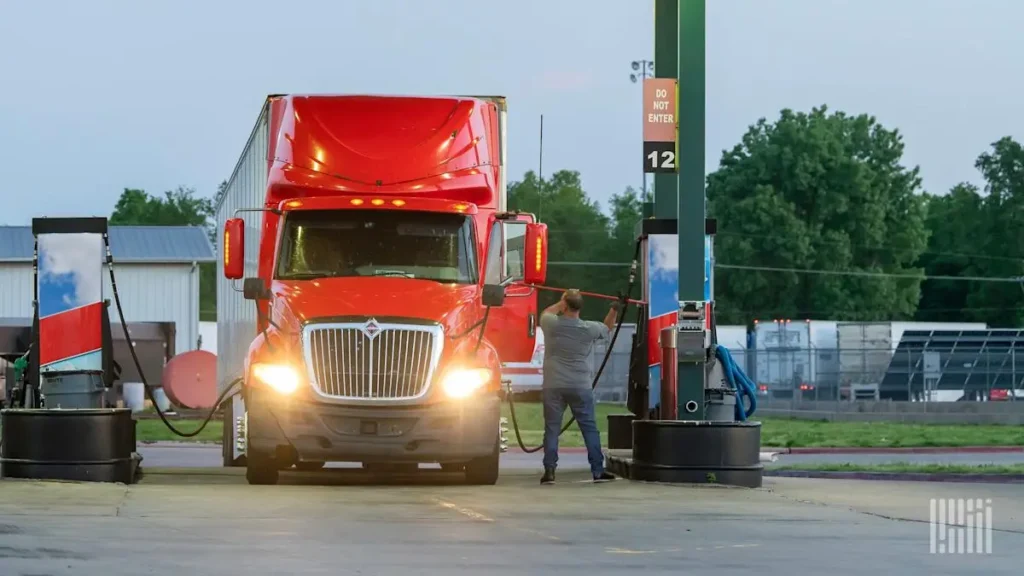
This forecast reset is one of the biggest reasons Dispatch Republic keeps telling carriers not to book loads with old fuel math. A diesel price forecast is only useful if you update your load math when the diesel price forecast changes. The same lane that looked fine in January can become weak in April if the rate stayed flat while fuel moved sharply against you. That is exactly what has happened across many spot and mini-bid conversations this spring.
The bigger issue is how quickly the assumptions split apart. Some shippers are now pricing freight with April fuel reality in mind. Some brokers are still quoting lanes as if the Iran war only matters to tankers and container ships. Trucks, of course, do not get paid in theory. They get paid in what the lane covers today. When Brent crude volatility moves quickly like this, rate negotiation tactics stop being a nice skill and become a margin-control tool.
From the Dispatch Republic side, one of the most practical carrier strategies in this environment is resetting lane economics every week instead of every month. If you update your floor every 30 days, Brent crude volatility can already make your quote stale. If you are a one-truck business, that means your real break-even needs to be live. If you manage several trucks, your carrier strategies need to reflect region, route mix, deadhead, and how the Iran war is changing fuel risks from week to week.
When examining smaller freight operations, consistency often comes not from finding one big load but from steady movement. In that sense, having access to professional box truck dispatch or ongoing box truck dispatch support plays a practical role in maintaining balanced workflows.
Why Brent crude volatility does not translate cleanly into pump prices
A lot of drivers hear “oil is up” and expect diesel to move the same way, at the same speed, by the same amount. Real life is messier. Brent crude volatility matters, but Brent crude volatility is only one part of what you pay at the pump. EIA’s January 2026 diesel breakdown showed crude oil accounted for 41% of a retail diesel gallon, while refining made up 18%, distribution and marketing 24%, and taxes 17%. In EIA’s November 2025 outlook, the agency said crude would account for about 36% of diesel prices in 2026. That means more than half of the retail gallon still comes from things other than crude itself.
That detail matters because it explains why pump diesel can stay elevated even if benchmark oil pulls back for a few days. In April, the IEA said refining margins had temporarily surged as middle-distillate cracks hit record highs. EIA also said the Brent-WTI spread widened in March because Brent was more exposed to higher shipping costs and reduced oil flows, and EIA’s April report showed the spread peaking at $15 a barrel in April before easing later in the year under its baseline assumptions. This is why carrier strategies based only on crude headlines usually fail. Better carrier strategies watch Brent, diesel benchmarks, refining pressure, and regional pump spreads together.
The regional side of the problem is just as important as the macro side. On April 20, the national average diesel price was $5.403 a gallon, but New England was at $5.862 and the Central Atlantic was at $5.924. Even the broader East Coast average was $5.494. So when a broker tells you “diesel is coming down,” the next question should always be, “Where?” Good carrier strategies do not buy fuel as if geography does not matter.
This is also why disciplined rate negotiation tactics help keep broker calls grounded. You do not need to argue foreign policy. You only need to explain the operating reality: Brent crude volatility is still feeding pump prices, the Iran war is still keeping energy markets nervous, and the rate has to match the cost of running the truck now. The strongest rate negotiation tactics in a fuel shock are calm, simple, and tied to current benchmarks.
What fuel inflation really means for your rates
Here is the mistake we see all the time: a carrier sees a higher all-in market rate and assumes margin is improving. Sometimes it is. Sometimes it is not. In March, DAT said average spot rates rose to $2.52 per mile for dry van, $2.97 for reefer, and $3.09 for flatbed. But DAT also said van and reefer linehaul declined month over month and that the national average van fuel surcharge jumped from 41 cents to 61 cents a mile, reefer climbed to 67 cents, and flatbed rose to 73 cents. In plain English, fuel was doing a lot of the lifting.
That distinction is one of the most important practical lessons in this entire diesel price forecast. When fuel inflation pushes up the gross number, it can make the market look healthier than it feels inside the cab or inside the fleet P&L. Cass reported that the freight expenditures index rose 4.2% year over year in March, while the truckload linehaul index was only up 1.8% year over year and capacity tightening from higher diesel prices was doing a lot of the work. That is why rising all-in rates do not automatically mean healthier margins.
A simple one-truck example shows the pain. Say a dry van runs 2,500 paid miles in a week and averages 6.8 miles per gallon. That truck burns about 368 gallons. If your planning model was built around a diesel number near the old lower EIA view and the real market is about $1.90 a gallon higher, that is roughly $700 more in weekly fuel expense. That extra money is not theoretical. It is truck-payment money, maintenance-reserve money, and owner pay flowing straight into the tanks. The diesel price forecast is not background noise. It changes the survival line.
A bigger fleet version looks even harsher. A five-truck fleet running a combined 11,500 paid miles a week at 6.7 mpg uses roughly 1,716 gallons. A fuel swing of $1.00 per gallon changes weekly fleet fuel spend by about $1,700. Over four weeks, that is almost $6,900. This is why the most useful carrier strategies in 2026 start with fuel-adjusted lane math, not with hope that the next week will feel easier. Brent crude volatility and the Iran war can wreck a small fleet faster through cash timing than through the monthly income statement.
The real-world behavior inside the market already reflects this. Reuters reported that, in a March poll by DAT, 18% of surveyed trucking firms had halted operations because of the fuel spike, about 44% had become more selective on load weights, and about 45% were driving fewer miles. Those are not emotional reactions. Those are rational carrier strategies in a market where cheap freight turns dangerous faster than many contracts can reset.
Rate negotiation tactics that actually work in a fuel shock
If fuel is moving faster than your pricing, rate negotiation tactics are not optional. They are your first line of defense. The good news is that the most effective rate negotiation tactics are not fancy. They are just more disciplined than what many carriers do in a softer fuel market. DAT’s own April guidance to carriers was clear: secure fuel surcharge agreements that reflect current diesel prices, and do not let old language sit untouched while the market resets under your feet.
The first rule is to stop thinking only in all-in numbers. In a stable market, an all-in rate may be enough for a quick yes or no. In this market, it hides too much. One of the most useful rate negotiation tactics in 2026 is forcing linehaul and fuel to be discussed separately, even if the broker initially presents one bundled number. A calm line such as “My floor changed because fuel changed” works better than a long speech, especially if you can point to the weekly EIA diesel benchmark and the customer’s own fuel surcharge logic.
The second rule is to shorten the life of your quote. In a fuel shock, same-day pricing can get stale fast on delayed pickups, multi-stop freight, or loads that get rolled. One of the most practical rate negotiation tactics is adding a reset point: the number is good for pickup today, under current fuel, and gets revisited if the load moves to tomorrow or if the shipper changes the appointment window. Brent crude volatility makes stale quotes expensive.
The third rule is to price the whole trip, not just the loaded miles. Smart rate negotiation tactics always account for deadhead to pickup, deadhead after delivery, tolls, dwell, mountain routing, and the likely reload market. If the broker wants to talk only about loaded miles, bring the whole trip back into the conversation. Many weak loads still look acceptable only because someone is pretending the unpaid pieces do not exist. That is one reason a good dispatcher often protects margin better than a tired driver trying to run and negotiate at the same time.
The fourth rule is to ask for fuel language, not just more money. Ask whether the fuel surcharge table refreshes weekly or with a lag. Ask whether the benchmark is current or old. Ask for a re-opener on repeat lanes. Ask for surcharge and linehaul to be shown separately when possible. These details sound boring until they cost you a month of margin. In 2026, some of the best rate negotiation tactics are contract-cleanup tactics.
A simple script still works: “On this lane, current fuel changes my floor. If you need coverage today, I need the linehaul adjusted or a fuel add-on tied to this week’s diesel benchmark.” That is not aggressive. It is clear. The best rate negotiation tactics usually sound that simple. They take Brent crude volatility and the Iran war out of the abstract and turn them back into cents per mile.
Carrier strategies that make sense for owner-operators and small fleets
The trucking market is still mostly a small-business market. Reuters, citing ATA and Department of Transportation data, reported that there were almost 580,000 active U.S. motor carriers as of June 2025 and that 91.5% operated 10 trucks or fewer. At the same time, ATRI’s 2025 operational-costs update put average truck operating cost at $2.26 per mile in 2024, with fuel at 48.1 cents a mile. That fuel figure was a calmer-year baseline. In a spring 2026 shock, the damage compounds fast.
The first of the practical carrier strategies is weekly cost-floor discipline. Not yearly. Not quarterly. Weekly. Update your break-even and your target margin using current fuel numbers. If Brent crude volatility is severe, a stale floor is dangerous. Most owner-operators do not fail because they cannot find any freight at all. They fail because they haul too much freight below the real floor while cash is draining faster than settlements arrive.
The second of the most useful carrier strategies is lane selection. In a fuel shock, not every mile is worth taking. Long, low-paying freight with weak reload options is far more dangerous when the Iran war is still keeping diesel unstable. Shorter regional freight with better reload density can protect cash flow even if the first-leg gross number looks smaller. That is why Dispatch Republic often tells carriers to compare profit per day and reload quality, not just the first-line rate. Good carrier strategies are often less emotional and more boring than drivers expect. That is exactly why they work.
The third of the stronger carrier strategies is fuel geography and liquidity control. Reuters reported that U.S. fleets were spending an average of $5.52 a gallon on diesel as of April 14, according to Samsara fleet data that covered almost 1 billion gallons of purchases. When your gallons cost that much, where you buy matters, and when you get paid matters even more. Fuel is bought today. Many brokers do not pay today. So carrier strategies in 2026 have to be built around working capital, not just around gross revenue.
The fourth of the better carrier strategies is selective capacity. If one truck is weak on fuel economy, one driver prefers poor reload lanes, or one customer refuses to move with fuel, then saying no is often cheaper than saying yes. DAT’s March poll already showed firms parking trucks, cutting miles, and getting more selective. That is not panic. That is survival discipline. Owner-operators often think carrier strategies are only for larger fleets. In a year like this, one-truck carrier strategies matter the most because there is less room to hide mistakes.
The fifth of the strongest carrier strategies is dispatch-led communication. A strong dispatcher should know when Brent crude volatility changed the lane floor, when a broker needs a quick benchmark reference, when the Iran war is pushing energy headlines back into negotiations, and which rate negotiation tactics fit a repeat customer versus a one-off spot load. That is the value-add beyond finding freight. In 2026, time spent protecting margin is often more valuable than time spent chasing one more cheap load.
Because hotshot runs often involve short hauls and partial loads, planning becomes a matter of overall efficiency. Structured hotshot load dispatching together with reliable hotshot dispatch support helps keep multiple trips flowing smoothly.
What the rest of 2026 could look like for diesel and rates
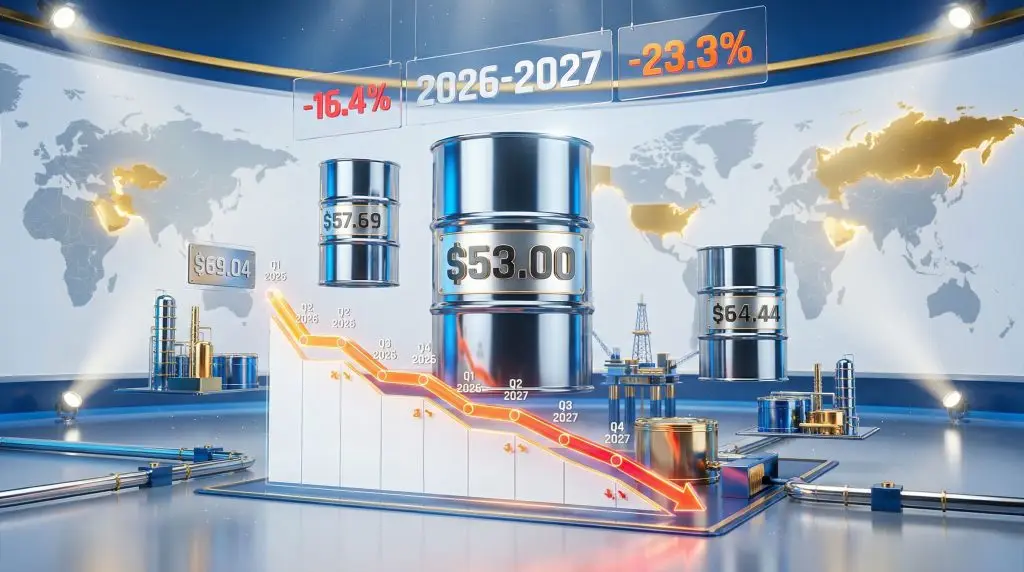
The baseline case is still the EIA case. In April, EIA said its outlook assumed the conflict would not persist past April and that traffic through the Strait of Hormuz would gradually resume. Under that view, production shut-ins rise to 9.1 million barrels per day in April, then fall to 6.7 million in May and move back close to pre-conflict levels later in 2026. That is why EIA still expects Brent crude volatility to cool from a second-quarter peak near $115 and drop below $90 in the fourth quarter, even while keeping the annual 2026 diesel price forecast at $4.80.
The sticky case is the one many truckers should plan around. In the sticky case, the Iran war is no longer front-page shock every day, but the Iran war still leaves enough risk in shipping and products to keep buyers nervous. Outside analysts are already showing that range. Reuters reported that Goldman Sachs kept a 2026 Brent average forecast of $83 while flagging heavy two-way risk around Hormuz flows, and Reuters also reported that ANZ expected Brent to stay above $90 during 2026 before ending the year near $88. That spread is useful for truckers because it tells you the market still has a wide disagreement zone. When forecasts are that wide, rate negotiation tactics and carrier strategies need to stay conservative.
Then there is the shock case. The IEA said member countries agreed in March to make 400 million barrels from emergency reserves available to the market, and Reuters reported that the United States is releasing 172 million barrels from the Strategic Petroleum Reserve as part of that broader response. Those actions help. But they do not erase physical constraints if shipping stays impaired for longer. On April 15, Reuters reported Goldman estimated oil flows through the Strait were still only about 10% of normal. That is why any renewed escalation in the Iran war could still hit diesel harder than many carriers want to believe.
So what is the practical takeaway for Dispatch Republic readers? Build your rates off the sticky case, not the best case. A diesel price forecast should guide your floor, but your fuel surcharge language should protect you when the diesel price forecast is wrong. Use rate negotiation tactics that work even if fuel stays unstable. Build carrier strategies that keep you alive if cash flow tightens for another quarter. If fuel eases faster than expected, treat that as upside, not as the foundation of the business plan.
That is the real call to action here. If you are waiting for perfect certainty before updating your lane floor, you are already late. Dispatch Republic can help drivers and fleets make sense of Brent crude volatility, translate the Iran war into lane math, tighten rate negotiation tactics, and build carrier strategies that protect margin instead of just chasing gross revenue.
If you’re an owner-operator hauling specialized freight, don’t go it alone. Explore Dispatch Republic’s box truck dispatch services and car hauler dispatch services to access top-paying loads and compliance support. Check out our car hauling dispatch services and blog for more tips. Our dispatchers are experts in car hauling loads, flatbed loads, and reefer loads – we can match your truck to the best freight and handle the paperwork. Let us help you keep your rig loaded, safe, and legal.
For a deeper dive into the hotshot hauling business, read our Box Truck vs. Dry Van: Which Is Better for Your Business? and Step Deck vs. Flatbed: Which Is Right for Your Fleet?
Ready to make the most of your trucking business? 🚚💨 Reach out to Dispatch Republic and let our experts help maximize your earnings with tailored reefer dispatch service and dry van dispatch service solutions. We’ll handle the logistics while you keep on truckin’. Contact our truck dispatch service to get started on the road to greater profits and less hassle!
For more detailed guides, check Dispatch Republic’s resources on dispatching and the trucking business. Recent FMCSA Rule Changes for Immigrant CDL Holders if you’re weighing career paths, and Hotshot Dispatch and Compliance: Key Regulations Every Dispatcher Should Know to understand the dispatch side of the business.
If you’re an owner-operator juggling multiple responsibilities, consider partnering with a professional truck dispatch service to take the load off your shoulders—literally. At Dispatch Republic, we specialize in helping carriers run smarter and earn more by expertly managing load boards, negotiating top rates, and handling paperwork for dry vans, reefers, flatbeds, box trucks, step decks, and even hotshots. Our team monitors multiple premium load boards around the clock, ensuring your truck stays loaded with the right freight, at the right rate, on the right lane. Whether you’re scaling up or just getting started, having a dedicated dispatch team in your corner means fewer empty miles, less stress, and more time to focus on driving and growing your business.
Frequently Asked Questions
How is Brent crude volatility affecting trucking rates in 2026?
Brent crude volatility is pushing diesel costs higher and making weekly operating costs less predictable. EIA moved from a much softer early-year oil view to a 2026 outlook of $96 Brent and $4.80 diesel, and DAT’s March data showed much of the rate increase was fuel recovery rather than strong linehaul improvement. That is why carriers need tighter rate negotiation tactics and more disciplined carrier strategies to keep loads covering current fuel instead of old assumptions
Why does the Iran war matter to U.S. owner-operators if they buy fuel in America?
The Iran war matters because it disrupted flows through the Strait of Hormuz, tightened global diesel-related product markets, and pushed fresh risk premiums into oil and refining. The IEA said the 2026 demand outlook flipped from growth to contraction and that middle-distillate cracks reached record levels, while April 22 reporting showed Brent trading back above $100 as shipping incidents continued. U.S. truck stops are domestic, but the pricing logic behind those gallons still reacts to Brent crude volatility and the Iran war.
Which rate negotiation tactics work best when diesel keeps moving every week?
The best rate negotiation tactics in this market are simple: use current EIA diesel data, separate linehaul from fuel whenever possible, shorten quote validity, ask for rate reopeners on repeat lanes, and include deadhead and dwell in the trip math. DAT’s April guidance specifically said carriers should secure fuel surcharge agreements that reflect current diesel prices and revisit outdated fuel language before it becomes a margin problem.
What carrier strategies help small fleets survive fuel inflation?
Small fleets need weekly cost-floor updates, stricter lane discipline, better fuel-buying geography, tighter cash-flow planning, and the willingness to turn down freight that no longer works. Reuters reported that 91.5% of active U.S. carriers operate 10 trucks or fewer, and a March DAT poll showed some companies had already halted operations, cut miles, or become more selective on loads because of the fuel shock. Those are hard choices, but they are rational carrier strategies in a year shaped by Brent crude volatility and the Iran war.
Can rates keep rising if the Iran war cools later in 2026?
Yes, but the reason matters. If the Iran war cools and Brent crude volatility eases, diesel may soften from spring highs. Rates could still stay firm if capacity remains tight or freight demand improves. But if rates rose mostly because fuel inflated all-in pricing, easier fuel could expose weak linehaul. That is why rate negotiation tactics and carrier strategies still matter even in a calmer headline environment.
Ready to Take Your Trucking Career to the Next Level?
Whether you’re an owner-operator, a company driver, or a carrier company in need of truck dispatch services, Dispatch Republic is here to help. Our team of experienced truck dispatchers offers affordable, professional truck dispatch solutions designed to save you time, increase your earnings, and make your business more efficient.
Thinking about outsourcing your truck dispatching? Contact Dispatch Republic today and move smarter, not harder.
Found our Blog useful? Spread the word:
Check our latest posts:

Contact us today to see how our team can support your trucking business.