

Table of contents
- Why the USA Iran conflict matters to U.S. trucking right now
- How the USA iran war risk becomes Iran conflict and diesel prices in the United States
- Practical rate strategy: the impact of oil price on trucking day by day
- Dispatch Republic operations playbook during USA Iran conflict fuel volatility
- Re-booking loads fast
- Adjusting routes and planning safe stoppage
- Handling communications with brokers and shippers
- Paperwork and compliance during delays
- Advising on parking, security, and risk
- Fuel spikes plus capacity shocks: why rates can jump faster than expected
- What to watch next and how to stay calm
- Two real-world scenarios drivers are facing in March 2026
- Quick action checklist for owner-operators and small fleets
- Frequently Asked Questions
Fuel is the one cost that can erase a “good” week without warning.
If you run 2,500 miles, win a decent rate, and then diesel jumps 30–60 cents, your numbers change instantly. That is why the USA Iran conflict is not “far away news.” It hits your business through the pump. And if the USA Iran conflict escalates into a broader USA iran war, the market can price in risk even faster. This is the impact of oil price on trucking in real life: your cost per mile changes before your rate confirmation does.
At Dispatch Republic, we talk with brokers daily. We also talk with owner-operators daily. When the Iran conflict and diesel prices starts moving, we see the same fight over and over: brokers want to keep linehaul flat and pretend fuel is “your problem.” That works only if you have a clean fuel surcharge that adjusts fast enough, or if you are strong enough to counter and walk away. The impact of oil price on trucking is mainly about who carries the fuel risk—carrier, broker, or shipper.
This report explains, in simple English, how the USA Iran conflict can drive oil volatility, how that turns into the Iran conflict and diesel prices in the U.S., and what dispatchers and carriers can do immediately to protect net profit. We will give practical scripts, a simple pricing calculator, and operational steps that a truck dispatch service can run while the driver focuses on safe driving.
Why the USA Iran conflict matters to U.S. trucking right now
The USA Iran conflict matters because oil is global. Even if the United States imports less Persian Gulf crude than it used to, global oil pricing still moves U.S. diesel.
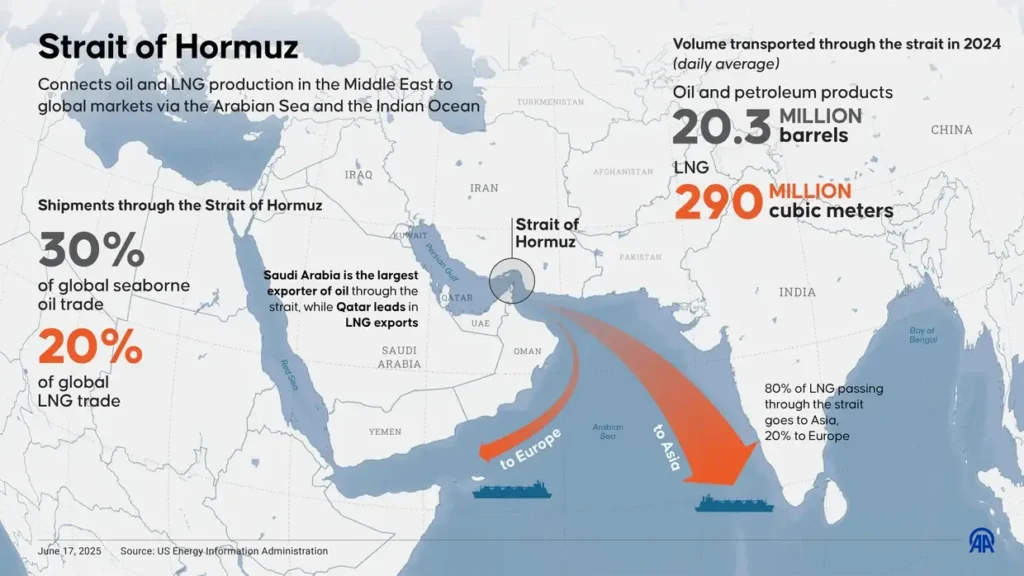
Recent reporting described oil and gas prices surging as conflict escalated and disrupted energy production and shipping in the Middle East, including disruption and risk in the Strait of Hormuz. Those headlines are essentially a “risk premium” story: markets price the chance of tighter supply and harder shipping before the shortage is fully visible. That is how a USA iran war risk becomes a diesel problem for a carrier in Ohio or Texas.
In one March 2026 update, Reuters described Brent crude spiking above $82 per barrel before easing, and U.S. crude peaking in the mid‑$70s, while analysts warned that sustained disruption in the Strait of Hormuz could push prices much higher.
For trucking, that is the impact of oil price on trucking: a $5 to $10 swing in crude can feed into the Iran conflict and diesel prices within days or weeks. Even if you don’t believe the USA iran war will last, the market may still price the risk while it’s uncertain, and that risk premium is enough to change your weekly fuel bill.
Strait of Hormuz basics that every carrier should know
Here is the key fact that makes the USA Iran conflict important: the Strait of Hormuz is one of the most critical oil chokepoints on Earth. U.S. Energy Information Administration (EIA) reporting in June 2025 stated that in 2024, oil flow through the strait averaged about 20 million barrels per day—about 20% of global petroleum liquids consumption—and that very few practical alternatives exist if it is closed.
EIA also noted that in 2024 the United States imported about 0.5 million barrels per day of crude and condensate from Persian Gulf countries through Hormuz, and it framed this as about 7% of U.S. crude imports and about 2% of U.S. petroleum liquids consumption. In simple terms: the U.S. may not be “dependent” like some Asian markets, but global pricing still impacts you. That is the impact of oil price on trucking and the Iran conflict and diesel prices.
The point is not to scare drivers. It is to show why the USA Iran conflict can move your weekly costs even if your own freight doesn’t touch the coast.
What “oil price surge” means for trucking
When news organizations say oil jumped because the USA Iran conflict escalated, the trucking impact is fast because diesel prices tend to follow crude trends. Reuters described Brent and U.S. crude price spikes tied to the escalation and shipping disruption risk.
Associated Press (AP) reporting also highlighted that Strait disruption affects a large share of global oil flows and noted a rule-of-thumb relationship: a $10 increase in crude can add about 25 cents per gallon to gasoline. While diesel isn’t identical to gasoline, the core idea holds: crude moves first, and retail fuels follow. That is the impact of oil price on trucking from the top of the supply chain down to your tank.
So when we say Iran conflict and diesel prices, we are describing the pass-through from crude risk to retail diesel.
The complexity of refrigerated shipments means tighter coordination from pickup to delivery. Effective reefer load dispatching alongside diligent reefer dispatch support helps ensure goods reach destinations on time.
USA iran war scenario planning for fuel risk
No one needs to predict the future to protect their business. You only need a plan for the risk window.
If the USA iran war stays limited and shipping keeps moving, oil may stabilize quickly. If the USA iran war expands and shipping risk grows, markets can keep bidding oil higher, and the Iran conflict and diesel prices becomes a bigger hit.
Here is the practical difference for carriers:
- In a short USA iran war shock, spot loads may move first, then normalize.
- In a prolonged USA iran war shock, contracts reset, fuel surcharge tables move up, and the impact of oil price on trucking becomes the new normal.
Either way, the USA Iran conflict is enough reason to tighten your pricing and documentation today.
USA iran war fuel spike playbook for owner-operators
The goal is not to “read the news.” The goal is to protect your week.
A USA iran war headline can make fuel markets jump even before any physical shortage hits the United States. That is why we treat USA iran war volatility as a pricing trigger, not as a debate topic. When drivers ask “What should I do?” we answer with a checklist.
Here are practical actions when USA iran war risk is rising:
- Update your minimum same day. If USA iran war pushes crude up, assume the Iran conflict and diesel prices will follow. Price it now, not after you lose money.
- Put the math in your counteroffer. “This load needs +8 cents per mile because of the Iran conflict and diesel prices.” That is the impact of oil price on trucking in one sentence.
- Don’t accept “fuel included” without clarity. In a USA iran war week, “fuel included” often means “carrier risk included.”
- Use a fuel stop strategy. During USA iran war volatility, buying at the wrong place or the wrong time can wipe out your margin.
- Reduce empty miles. Deadhead is always costly, but in a USA iran war fuel spike it is painful.
- Document detention fast. High fuel makes detention more expensive. If the Iran conflict and diesel prices is rising, detention pay is not optional.
- Treat appointments like money. In a USA iran war week, a missed appointment can force extra deadhead and extra fuel burn.
Now here is the dispatch version of the same idea:
When the USA Iran conflict is escalating and the Iran conflict and diesel prices is rising, you want clean freight: predictable docks, strong reload markets, and clear writing on accessorials. That is how you keep the impact of oil price on trucking from becoming a shutdown problem.
And yes, patience matters. A short USA iran war shock can fade. But you still must price the week as if it is real, because your diesel receipt is real.
How the USA iran war risk becomes Iran conflict and diesel prices in the United States
Now let’s connect the dots step by step. This is where you protect your wallet.
The chain is simple:
USA Iran conflict risk -> higher crude price expectations -> higher wholesale diesel -> higher retail diesel -> higher carrier fuel spend -> higher freight cost per mile
That is the impact of oil price on trucking.
Spot market rates are where fuel shock shows up first. If the USA Iran conflict headlines keep getting hotter, spot market rates can jump in tight lanes even before contract pricing resets. That is why we watch spot market rates daily and use them to support rate counters.
The best free data source for diesel changes
If you run a trucking business, you need a reliable diesel reference. The most widely used public benchmark in the U.S. is EIA’s weekly on-highway diesel series.
EIA’s “Gasoline and Diesel Fuel Update” shows weekly U.S. on-highway diesel prices and regional breakdowns. For the week of February 23, 2026, it showed a U.S. average of $3.809 per gallon and also shows that regions like the West Coast and California are materially higher.
This matters because a carrier that runs 2,500 miles in a week at 6.5 mpg uses roughly 385 gallons. A 25-cent diesel move is close to $96 in weekly cost per truck. A 50-cent move is close to $192. That is the impact of oil price on trucking in your pocket.
EIA also breaks down what you pay for in a gallon of diesel. In a November 2025 snapshot, crude oil was shown as a large component of the retail diesel price, along with refining, distribution, marketing, and taxes.
If crude rises because of USA Iran conflict risk, diesel often follows because crude is a major input.
Iran conflict and diesel prices checkpoints you can review in five minutes
If you want to manage fuel like a professional, you need a routine. The USA Iran conflict headlines are noisy. The Iran conflict and diesel prices shows up in the numbers.
Here is a simple weekly routine. Every Monday (or the first business day after), check the latest EIA diesel update and ask:
- Is the Iran conflict and diesel prices moving up week over week?
- Are East Coast and Gulf Coast diesel moving faster than the Midwest?
- Are West Coast prices already elevated (meaning your buffer must be larger)?
- Are you seeing the same move on your receipts?
Then turn that into action. If the Iran conflict and diesel prices is rising and the USA iran war risk is still high, raise your minimum before you book the next long haul. That is the impact of oil price on trucking as a habit, not a guess.
Also remember: the Iran conflict and diesel prices is not just a “national average.” If you fuel in high-price regions, the impact of oil price on trucking is worse for you than the national benchmark.
Why diesel can jump faster than your freight rates
Here is the hard truth for carriers: fuel can jump in days; freight rates often adjust in weeks.
Yes, contracts with a clear fuel surcharge can adjust weekly if they follow a benchmark. FreightWaves explained that a fuel surcharge is designed to adjust with diesel price changes so the base rate does not need constant renegotiation.
But spot freight may not protect you. If you take an all-in spot rate and diesel rises after you book, the broker is not required to “make you whole.” That is why the impact of oil price on trucking can turn profitable spot freight into break-even freight.
So, when the USA Iran conflict is in the news, a dispatcher should assume fuel volatility and adjust minimums immediately.
Operators in specialized hauling often find that structured open deck dispatch services help maintain smoother scheduling, especially when combined with organized dispatch for open deck loads to keep flatbeds moving.
Practical rate strategy: the impact of oil price on trucking day by day
This section is the impact of oil price on trucking turned into action.
Every owner-operator should be able to answer this question:
If diesel goes up 50 cents this week, what happens to my profit per day?
If you can’t answer that, you are not pricing the impact of oil price on trucking correctly.
A simple calculator you can do on paper
Fuel cost per mile = diesel price per gallon / your mpg
Weekly fuel gallons ≈ miles / mpg
So if you run 2,500 miles at 6.5 mpg, you burn about 385 gallons.
If diesel rises from $3.80 to $4.30 due to Iran conflict and diesel prices, that’s about $0.50 x 385 = $192 extra for the week.
That is the impact of oil price on trucking in one number.
Now translate that into rate needs:
If your paid miles are 2,500, that $192 is about $0.077 per mile.
So you need around 8 cents per mile more—just to stay equal.
That is why it is not enough to say “fuel is up.” You have to convert the Iran conflict and diesel prices into a per-mile requirement.
How to negotiate fuel in spot freight
Spot freight lives on speed and urgency. It also lives on confusion. Brokers may:
- quote all-in and say “fuel is included,”
- refuse fuel surcharge language,
- promise “we can pay detention later” but not put it in writing.
Here is what works in a fuel shock week tied to the USA Iran conflict:
- Make a clear counter: “My all-in is $X because diesel moved.”
- Offer a structure: “If you want to hold linehaul, add a fuel surcharge line tied to EIA weekly diesel.”
- Add time protection: “Detention starts at 2 hours and is $X/hour.”
This is the impact of oil price on trucking as negotiation, not complaining.
Contract freight: know your fuel trigger and baseline
If you are on contracts, ask your broker or shipper manager:
- What baseline diesel price is the fuel surcharge based on?
- How often does it reset (weekly, monthly)?
- What mpg assumption is used?
- Is the fuel surcharge paid to the carrier and passed to the driver (if leased)?
FreightWaves described the basic purpose of a fuel surcharge: adjust as diesel rises and falls so base pricing stays stable while fuel is covered.
If you don’t know your terms, you can’t trust that the impact of oil price on trucking is covered.
The hidden part of the impact of oil price on trucking: downtime costs
Fuel spikes usually come with slower networks:
- reroutes,
- congestion near terminals,
- appointment changes,
- longer dwell because receivers get backed up.
Downtime is expensive in every market. It is worse when fuel is high because every idle hour burns fuel and pushes the next load later.
So the impact of oil price on trucking is also a time management problem. This is why dispatchers focus on operational efficiency during a fuel shock week.
Dispatch Republic operations playbook during USA Iran conflict fuel volatility
This is where dispatch saves money, not just finds freight.
A truck dispatch service supports drivers in five practical ways when the USA Iran conflict or USA iran war creates fuel volatility:
Re-booking loads fast
If a load cancels or a receiver pushes an appointment, you must recover the week. A truck dispatch service can re-book faster than a driver can safely do while driving. That reduces empty miles and reduces wasted time—the two fastest profit leaks during Iran conflict and diesel prices conditions.
When fuel is high, an empty day is not just “lost revenue.” It is lost opportunity plus higher cost per remaining mile.
Adjusting routes and planning safe stoppage
A fuel shock week increases pressure. Some drivers push too hard. That is dangerous.
A truck dispatch service should plan routes that are safer and more predictable and should advise safe parking or stoppage when conditions or fatigue demand it. That protects your authority and your future earning power.
Handling communications with brokers and shippers
During USA Iran conflict headlines, brokers and shippers get nervous. They want updates. They want documentation.
We handle check calls, update ETAs, and document delays so the driver can focus on safe driving and managing the clock. This is the operational side of the impact of oil price on trucking: fewer mistakes, fewer penalties, fewer late claims.
Paperwork and compliance during delays
Fuel volatility weeks increase disputes. Paperwork becomes money.
We push drivers to send PODs, BOLs, lumper receipts, and timestamp evidence fast. That helps with detention claims and helps cash flow.
Detention is especially painful when the Iran conflict and diesel prices rises because your cost per hour is higher.
Advising on parking, security, and risk
Conflict headlines can change routing risk. If ports, refineries, or distribution nodes get congested, teams compete for parking and staging.
We advise drivers on safer parking options and controlled stop points. The goal is simple: protect the driver, protect the schedule, protect the business.
Fuel spikes plus capacity shocks: why rates can jump faster than expected
The user asked us to include a second pressure point: capacity tightening from licensing, compliance, and broker/insurance filtering.
This matters because if fuel rises at the same time as capacity tightens, freight rates can move faster. The impact of oil price on trucking then becomes more dangerous for carriers who don’t raise rates.
Non-domiciled CDL enforcement and capacity math
Federal Motor Carrier Safety Administration’s 2026 final rule on non-domiciled CDLs and FMCSA’s FAQs state that non-compliant states must pause issuance on the effective date until they meet requirements.
That can reduce usable driver supply in affected regions. Reduced supply increases rate pressure. This is why dispatchers say a fuel shock plus a capacity shock can create a sharp repricing moment.
California license cancellations and local tightening
California Department of Motor Vehicles’s late‑2025 announcement said it extended the cancellation date of approximately 17,000 nondomiciled CDLs by 60 days while working with FMCSA, setting a March 6, 2026 date.
Local tightening can create hot lanes and fast spot premium. If that overlaps a USA Iran conflict fuel shock, the impact of oil price on trucking becomes even more important to price correctly.
Broker screening and insurance tightening
In recent years, broker onboarding has become stricter. When licensing risk increases, some brokers respond by screening carriers more aggressively. FreightWaves reported that Highway introduced a feature allowing brokers to screen carriers based on non-domiciled CDL exposure for the carrier’s primary account owner.
When licensing risk increases, some insurers respond by tightening who they will work with.
Acrisure warned that underwriters may demand proof beyond a state-issued CDL and that uncertain exposure can lead to tougher terms or higher costs for carriers.
This is critical in fuel shock weeks. If you lose access to good brokers, you are forced into cheaper freight precisely when your diesel cost is higher. That is how the impact of oil price on trucking becomes a shutdown-risk event for some carriers.
What to watch next and how to stay calm
Nobody can control geopolitics. But you can control your process.
Here is the dispatcher mindset during a USA iran war news cycle: assume volatility, protect the week, and do not panic-book. A USA iran war headline can cause a one-day spike in crude, then a partial pullback, then another spike. That back-and-forth is exactly how the impact of oil price on trucking sneaks up on carriers who “wait to see.”
If the USA iran war stays intense, expect three things:
- More buyers demand proof and documentation.
- More brokers try to push fuel risk onto carriers.
- More carriers raise rates, which can lift spot negotiations.
If the USA iran war calms down, do not relax too fast. Diesel often lags crude, and the Iran conflict and diesel prices can stay elevated for a while even if the news cools.
This is why we keep repeating the same rule at Dispatch Republic: treat the USA Iran conflict as an immediate minimum-rate update, and treat the Iran conflict and diesel prices as a weekly audit item. The carriers who survive a USA iran war shock are the ones who act early, not the ones who complain late.
Finally, remember this: when you drive safely, document delays, and keep your books clean, you earn the right to negotiate. That is the real long-term impact of oil price on trucking.
Two real-world scenarios drivers are facing in March 2026
Scenario one: spot freight, no fuel protection.
A solo owner-operator books a strong all-in rate on Monday. Tuesday morning, diesel is higher in their area. The broker says “fuel is included.” The driver is now paying the Iran conflict and diesel prices with no adjustment. They still have to haul the load. The week profit shrinks. The fix is simple: treat the USA Iran conflict as an immediate minimum-rate update and counter with per-mile math, not emotion.
Scenario two: contract freight with a slow reset.
A small fleet has contract freight with a weekly fuel surcharge reset based on EIA. But the fleet also takes weekend spot loads. The spot loads have no fuel surcharge logic. When diesel spikes midweek, contract freight stays protected, but weekend profit disappears. The fix is also simple: spot minimums must include an “oil shock buffer” when USA iran war risk is elevated.
Quick action checklist for owner-operators and small fleets
If you want to survive—and even benefit—from a fuel shock driven by the USA Iran conflict, do these steps now:
- Track EIA weekly diesel every Monday and update your minimum rate the same day.
- Convert fuel moves into cents-per-mile, using your own mpg.
- Stop taking loads with bad detention history unless pay is high and terms are written.
- Ask for fuel surcharge language on repeat brokers and mini-contracts.
- Reduce empty miles and reposition strategically; high diesel punishes deadhead.
- Tighten paperwork timing; disputes rise when costs rise.
- Use a truck dispatch service to handle rebooking, negotiation, and billing so the driver can stay safe.
This is the impact of oil price on trucking turned into a plan.
If you want help running this playbook while you stay focused on safe driving, Dispatch Republic can help with dispatching, negotiation, lane planning, paperwork, and communication—especially when the Iran conflict and diesel prices is rising and the market is stressed.
If you’re an owner-operator hauling specialized freight, don’t go it alone. Explore Dispatch Republic’s box truck dispatch services and car hauler dispatch services to access top-paying loads and compliance support. Check out our car hauling dispatch services and blog for more tips. Our dispatchers are experts in car hauling loads, flatbed loads, and reefer loads – we can match your truck to the best freight and handle the paperwork. Let us help you keep your rig loaded, safe, and legal.
For a deeper dive into the hotshot hauling business, read our Box Truck vs. Dry Van: Which Is Better for Your Business? and Step Deck vs. Flatbed: Which Is Right for Your Fleet?
Ready to make the most of your trucking business? 🚚💨 Reach out to Dispatch Republic and let our experts help maximize your earnings with tailored reefer dispatch service and dry van dispatch service solutions. We’ll handle the logistics while you keep on truckin’. Contact our truck dispatch service to get started on the road to greater profits and less hassle!
For more detailed guides, check Dispatch Republic’s resources on dispatching and the trucking business. Recent FMCSA Rule Changes for Immigrant CDL Holders if you’re weighing career paths, and Hotshot Dispatch and Compliance: Key Regulations Every Dispatcher Should Know to understand the dispatch side of the business.
If you’re an owner-operator juggling multiple responsibilities, consider partnering with a professional truck dispatch service to take the load off your shoulders—literally. At Dispatch Republic, we specialize in helping carriers run smarter and earn more by expertly managing load boards, negotiating top rates, and handling paperwork for dry vans, reefers, flatbeds, box trucks, step decks, and even hotshots. Our team monitors multiple premium load boards around the clock, ensuring your truck stays loaded with the right freight, at the right rate, on the right lane. Whether you’re scaling up or just getting started, having a dedicated dispatch team in your corner means fewer empty miles, less stress, and more time to focus on driving and growing your business.
Frequently Asked Questions
How does the USA Iran conflict affect owner-operators immediately?
The fastest effect is a risk premium in crude oil that can feed into the Iran conflict and diesel prices. When markets fear disruption in key routes like the Strait of Hormuz, oil can jump quickly, and retail diesel often follows. Your best immediate defense is to treat the impact of oil price on trucking as a live number: update your minimum rate the same day fuel moves, not the next week.
If a USA iran war escalates, how fast can diesel prices change?
Diesel can move in days, and weekly benchmarks can capture it quickly. EIA’s weekly diesel update shows national and regional pricing and updates on a regular schedule. In a USA iran war volatility window, don’t rely on the national average alone—price your rate based on where you actually fuel and where you deadhead.
What’s the most common mistake carriers make during the impact of oil price on trucking?
The most common mistake is hauling the same loads for the same all-in pay while fuel rises. That makes the carrier “eat” the fuel increase. A clear fuel surcharge can help, but many spot loads don’t have strong fuel rules. During the USA Iran conflict news cycle, confirm whether fuel is truly covered or whether it is silently pushed onto the carrier.
How do I explain the Iran conflict and diesel prices to a broker who refuses higher pay?
Use simple math. Convert diesel to cents-per-mile based on your mpg, then show how much the Iran conflict and diesel prices changes your cost on the load length. Then counter with a specific number and a specific term: higher all-in, or a written fuel surcharge line tied to weekly diesel updates.
Can fuel shocks from the USA Iran conflict raise freight rates enough to offset higher diesel?
Sometimes yes, but not automatically. In an urgent market, capacity gets tight and spot negotiations can improve. In a short shock, brokers may resist and try to wait it out. Reuters reporting highlighted market debate about whether disruption would be brief or prolonged. The carriers who win are the ones who protect the week with early counters and tight operations, not the ones who assume rates will “catch up later.”
Why are non-domiciled CDL crackdowns showing up in a fuel-cost article?
Because multiple shocks can stack. If fuel rises due to the USA Iran conflict while usable capacity tightens due to licensing enforcement, rate pressure can rise faster. FMCSA’s final rule and California’s nondomiciled CDL process have created real capacity uncertainty, and brokers have started screening carriers tied to that exposure.
Ready to Take Your Trucking Career to the Next Level?
Whether you’re an owner-operator, a company driver, or a carrier company in need of truck dispatch services, Dispatch Republic is here to help. Our team of experienced truck dispatchers offers affordable, professional truck dispatch solutions designed to save you time, increase your earnings, and make your business more efficient.
Thinking about outsourcing your truck dispatching? Contact Dispatch Republic today and move smarter, not harder.
Found our Blog useful? Spread the word:
Check our latest posts:

Contact us today to see how our team can support your trucking business.