

Table of contents
- The New Playing Field: Brokers Can Be Sued for Bad Carrier Picks
- What Brokers Are Doing (and Expecting): Vetting and Documentation
- For Owner-Ops and Dispatchers: How to Stay Ahead
- The Role of Safety Scores: Your Performance on Paper
- Tips for Clean Truck Dispatch Documentation
- The New Broker/Carrier Relationship Landscape
- Bottom Line and Dispatch Action Plan
- Frequently Asked Questions
The freight industry was rocked in 2026 when the U.S. Supreme Court unanimously decided in Montgomery v. Caribe Transport II that brokers can now be sued under state law for negligent carrier selection. In plain terms, the old belief that brokers had a “get-out-of-jail-free card” under the FAAAA was overturned. Now, if a broker picks a trucking company with a sketchy safety record and an accident happens, the broker can share liability. For owner-operators and dispatchers, this ruling is huge. It means broker liability trucking is no longer a distant legal concept – it’s a part of every load tender. Brokers will demand tougher proof that carriers were vetted, and carriers with spotty records risk being dropped.
From a dispatch perspective, the message is clear: carrier vetting and truck dispatch documentation must be stricter than ever. Every broker and shipper will want to see an audit trail showing why you were chosen to haul the load. Your FMCSA files and CSA data (collectively, truck safety scores) will get a fresh look. If you can’t quickly show that you met authority, insurance, safety and compliance standards, a broker might mark you off their preferred list. In this article, we’ll unpack the ruling’s impact in plain English and give actionable tips from the yard and dock. You’ll learn why brokers now care intensely about safety scores and paperwork, what exactly goes into proper vetting, and how dispatchers can keep carriers— and their own records—out of hot water.
The New Playing Field: Brokers Can Be Sued for Bad Carrier Picks
Before May 14, 2026, many brokers assumed federal law shielded them from state tort claims tied to safety. But the Supreme Court decisively blew a hole in that protection. In Montgomery v. Caribe Transport II, C.H. Robinson had booked a load with Caribe Transport, a carrier under FMCSA “conditional” safety rating and with multiple safety infractions. When a crash injured a driver, the injured party sued the broker for negligent hiring. The broker argued FAAAA preemption, but the Court said no dice – negligent hiring is a safety issue, not an economic one.
Justice Barrett’s opinion made it clear: choosing who moves freight is closely tied to “the use of trucks on public highways” and therefore falls under safety authority. Simply put, a broker’s duty is to exercise ordinary care in picking a carrier. Justice Kavanaugh’s concurrence emphasized that brokers who do their homework shouldn’t fear automatic liability, but it also warned that juries and insurers will now scrutinize every decision. The practical upshot is that brokers across the country suddenly face greater exposure. States can now allow lawsuits claiming a broker was negligent in picking a carrier that turned out to be unsafe.
For truck dispatchers and owner-operators, this doesn’t change the roads, but it changes the rules of engagement. Brokers will adjust their procedures overnight. Instead of “just get it done,” we’ll hear more from brokers about vetting carriers, documenting the process, and even kicking suspicious carriers off tender lists. In a nutshell, broker liability trucking means you can no longer rely on word-of-mouth or incomplete checks. Your credentials—your safety history, your compliance papers, your inspection reports—will be requested and reviewed more carefully than ever.
What Brokers Are Doing (and Expecting): Vetting and Documentation
Industry watchers say brokers are tightening carrier vetting right now. A top trucking attorney advises brokers to require a documented carrier vetting process. In practice, that means they will systematically verify the following before they book a load:
- FMCSA Operating Authority: Brokers will confirm your MC and USDOT numbers are active and in good standing. An expired or downgraded authority can be an instant red flag.
- Insurance Coverage: Most brokers demand at least the $750,000 liability minimum (and many want $1 million). They will want a current Certificate of Insurance on file. Lapsed or insufficient insurance is an automatic deal-breaker.
- Safety Ratings and CSA Data: Expect brokers to pull your FMCSA safety data. That includes your truck safety scores or CSA BASICs – unsafe driving incidents, crash history, maintenance violations, HOS compliance, and driver qualification. If your record shows multiple “out-of-service” violations or a pattern of crashes, the broker needs a solid explanation (and proof of corrective action).
- Inspection History: Brokers will likely look at the last few roadside inspections. Consistent violations can sink a vetting.
- Carrier Packet: Brokers will collect your full onboarding packet. This usually includes your MC Authority, USDOT, insurance forms, W-9, a signed broker-carrier agreement, and often a rate confirmation. These are all part of the truck dispatch documentation they keep on file. Missing any piece can raise questions.
- References and Performance: If you’ve worked with any broker or shipper before, they might check your track record. Negative notes in a factoring or D&B report could come up.
Any carrier that fails one of these checks now risks being denied loads altogether. In fact, some brokers are adding real-time monitoring: if a carrier’s safety rating or insurance status changes after onboarding, their system automatically flags the carrier and blocks them from receiving new loads. In one company’s case, they said: “Once a carrier is locked out for a safety issue, our TMS simply won’t tender a load to them until it’s fixed.”
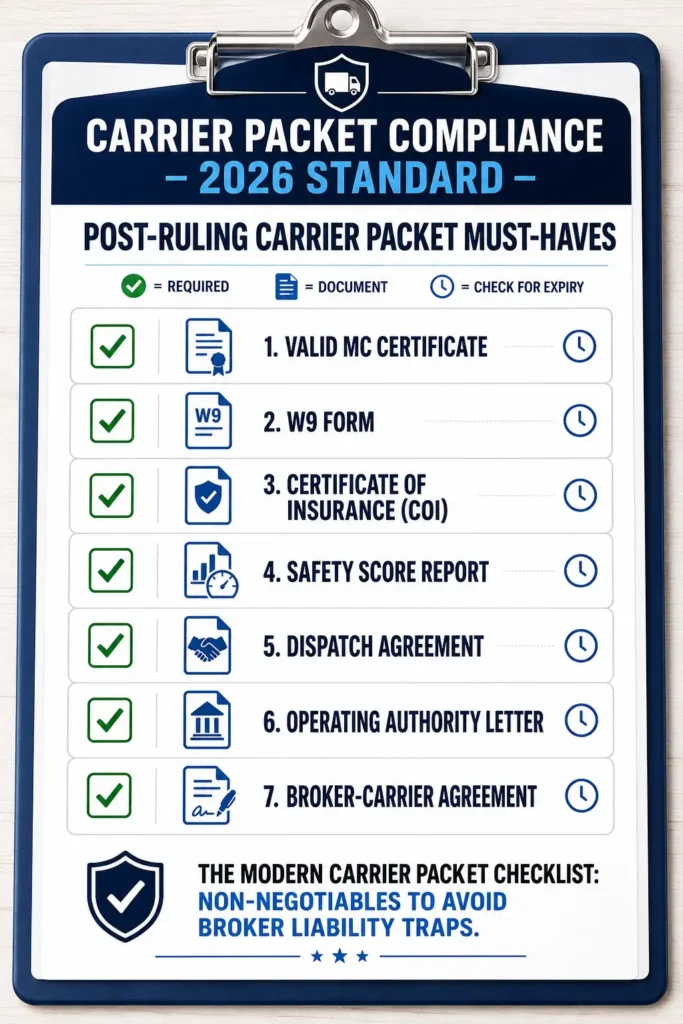
The bottom line: Carrier vetting is being treated like a safety checklist rather than a casual formality. A drive through the truck stops or a look at the FMSCA database might have once been enough informally; now brokers want digital proof in a file. They’ll want an audit trail. According to Adams & Reese, brokers should “preserve load-specific records” showing exactly what was checked for each shipment, by whom, and why the carrier was approved. That means in a dispatch office, someone needs to be saving copy/paste evidence of each check – snapshots of SAFER or PrePass pages, notes on a broker’s vetting log, email confirmations, anything to show “Yes, we did this vetting before the accident happened, not after.”
For Owner-Ops and Dispatchers: How to Stay Ahead
So what should an owner-operator or small fleet dispatcher do right now? The game has changed, and all of us in operations need to step it up. Here are some practical, experience-based pointers:
- Pre-Load Self-Audit: Before you tell the broker you’re ready, run through the basics yourself. Do you have an active MC number and USDOT on file with FMCSA? Is your Operating Status “Active”, not “Inactive”? Do a quick check on the FMCSA’s portal or SAFER to confirm.
- Insurance in Order: Keep your insurance COI up to date and on you (and on the dispatcher’s server). If your broker requires $1,000,000 and you only carry $750,000, get that extra or explain it beforehand. A missing or expired insurance certificate is often easier to catch before tender than after a crash.
- Update Your CSA/SMS Data: You should already be checking your CSA (FMCSA Safety Measurement System) scores regularly, but now it’s critical. A drop from “Satisfactory” to “Conditional” in any BASIC could get you flagged by brokers. If anything changes – say you have a driver caught speeding or a maintenance violation – communicate it to your dispatcher immediately. They need to know these numbers so they can prepare a response if a broker asks.
- Maintain Onboard Records: The dispatcher can help assemble your “truck dispatch documentation.” This means storing copies (digital is fine) of:
- Carrier Packet (MC authority, insurance, W-9, signed broker/carrier agreements)
- Rate Confirmations (the signed sheet confirming you agreed to the load and rate)
- Bills of Lading (proof of delivery details)
- Inspection Reports and DVIRs for recent trips
- Driver Qualification files (CDL and med card copies) and hours-of-service logs.
- Explain Your Safety Culture: Sometimes, a carrier has a glitch in the record but plenty of context. If you fixed a brake violation last month, note it. Dispatchers can keep a brief log of “corrective actions” – for instance: “Carrier #XYZ failed vehicle inspection on 2/15 (brake shoes); repairs completed on 2/20; next inspection clean.” Such notes show the broker that you’re on top of safety.
- Stay Informed: The trucking press and groups are buzzing about this. If you’re a dispatcher or owner-op, stay tuned to trade mags or legal updates. For example, brokers are discussing state-by-state standards, so being aware of your home state’s approach can help you prepare. Also, follow FMCSA news on anything like CSA updates or enforcement blitzes.
- Communicate with Brokers: If you have a broker you regularly work with, have a proactive conversation. Let them know you have your vetting docs organized. Ask if they have a checklist so you can make sure you meet every item. A few brokers might even share their onboarding list of requirements – study it and check off each box. (Adams & Reese suggests that shippers “should ask how your broker vets the carriers they dispatch”; as a carrier, you can turn that around and ask them!)
Example: One small carrier had a load denied by a broker without explanation. When they followed up, they learned the broker’s system had flagged the carrier’s safety score as a “yellow” (conditional) but the dispatcher had never known. Once the dispatcher realized this, they worked with the carrier to update driver qualification files and explain the issue. A few days later, the broker re-evaluated and released more loads. The lesson: err on the side of transparency and documentation so you can resolve doubts before they cost a load.
The Role of Safety Scores: Your Performance on Paper
Your truck safety scores (often thought of as CSA BASIC percentages) have always affected insurance and broker trust, but they’re about to have a much greater business impact. Brokers will filter carriers by safety history. A recent industry comment sums it up: “What brokers can control is knowing who they’re putting on their loads and being able to prove it”. High scores (good safety) get you in, low scores (flags) can keep you out.
FMCSA public data is easy for anyone to access. Dispatchers can quickly pull up a carrier’s current rating breakdown before confirming a load. If a carrier suddenly dips – for example, an unexpected head-on crash in the last 6 months – the dispatcher should alert the driver to take corrective measures or even remove that truck from finding loads until the issue is resolved. Read more about FMCSA Safety Score Changes in 2026: What They Mean for Load Access.
Brokers may give more business to carriers in the top safety quartile. For instance, some dispatchers report that brokers now preferentially assign their best-paying loads to carriers with “Satisfactory” ratings. A diagram might show that 70% of high-value load assignments went to carriers rated green (good), while only 20% went to yellow-rated carriers and 10% to those with any red flags. (See Visual 4 concept below.) In practical terms, if your truck safety score is slipping, expect to hear crickets when you call brokers. It’s in your interest to monitor your CSA percentile, intervene on driver issues, and run your own weekly snapshots of your SMS scores.

How Dispatchers Can Help
As a dispatcher, you sit at the crossroads of all this. Your actions now can make or break a broker’s confidence in your carriers. A few things dispatch can do:
- Implement a Pre-Booking Checklist: Whenever a new carrier or load comes up, run through a checklist (authority, insurance, safety, etc.). If something is missing or outdated, pause and fix it. Don’t let a problem slip through.
- Keep Digital Records: Store scanned copies of all critical documents in a shared cloud folder. Tag each by carrier name and date. The next time someone says “I lost that file,” you’ll have a quick search-and-send solution.
- Automate Reminders: Use calendar alerts for upcoming certificate renewals or DOT audits. If insurance expires in 6 months, put a reminder for 5 months to start renewal. Missing a compliance date can cost time and trust.
- Coordinate Driver Updates: When a new driver joins or leaves, immediately update files. For example, if a new driver signs on and shows a past DUI, the dispatcher should consider whether this affects your overall safety rating and inform the broker if necessary.
- Educate and Communicate: Brief your drivers and owner-operators about this change. They should know that broker screens are tighter now. Encourage them to volunteer any info (e.g., “I had an HOS violation fixed last month, here are the papers”).
- Offer Carrier Training: Where possible, encourage carriers to do safety refreshers. A dispatcher might share best practices for maintaining logs or avoiding violations.
- Foster Transparency: If a safety issue is flagged, don’t hide it. Sometimes honesty leads brokers to approve after explanation (e.g. a fix is underway). Kept secret, it can lead to dropped loads later.
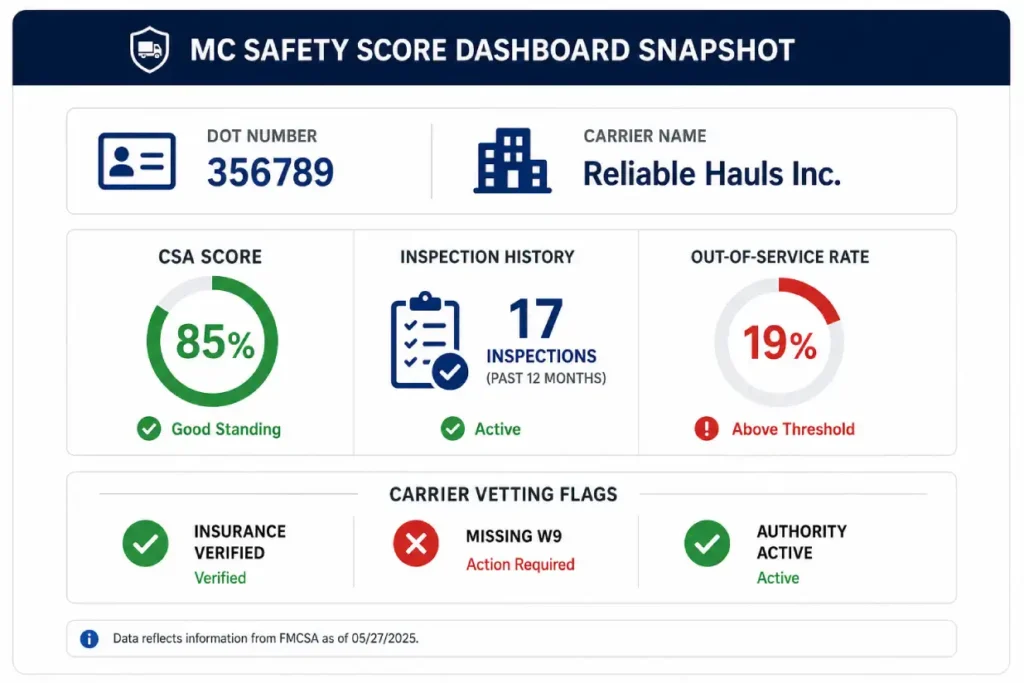
In short, the dispatch office should treat carrier vetting and recordkeeping as a core operational function – not just as annoying paperwork. The goal is to demonstrate reasonable care at every step. That way, if a broker asks “Why did you pick this carrier for Load #42?”, you have an answer ready. As one legal analyst put it, brokers can defend lawsuits if they “acted reasonably and arranged transportation with reputable trucking companies”. And that defense comes down to paper trails and processes that dispatchers own. Read more to learn about The Role of a Dispatcher in Managing Carrier Setup and Broker Compliance.
Tips for Clean Truck Dispatch Documentation
To summarize the most important paperwork and data points:
- Carrier Packet and Broker Agreements: Always submit a complete carrier packet. This includes:
- Proof of MC Operating Authority and USDOT Number.
- Current Insurance Certificate (for cargo and auto) with required limits.
- W-9 Tax Form (needed for payment processing).
- A signed Broker–Carrier Agreement or carrier packet sheet detailing terms.
- Completed Rate Confirmation or broker load confirmation (this shows you agreed to the rate and charge terms).
- Bill of Lading (BOL) templates in your folder so they’re ready to fill out on pickup.
- Safety and Compliance Records: Keep a file (digital or paper) with your last few years of:
- CSA/SMS snapshots or screenshots showing your BASIC scores.
- Driver Qualification Files for each driver (CDL, medical card, licenses) updated annually.
- Log audits and inspections (DVIRs, roadside inspection reports, any crash reports) along with corrective action notes. For example, if your truck was cited for an overloaded axle, keep the invoice for the fix.
- Preventive Maintenance Schedules or DOT vehicle inspection logs. If a wheel fell off and you fixed it, note it.
- Training and Policies: It doesn’t hurt to have a short training log or policy statement. For example, a one-page “Carrier Safety Commitment” that your company signs could complement your file. Something as simple as “Our policy is zero-tolerance for log falsification and annual training for drivers on safe driving” can show proactive care.
- Communication Records: Save emails or notes where you discussed safety or vetting with brokers. For instance, if a broker asked to see your renewal certificate and you emailed it, keep that chain. It proves you responded to inquiries promptly.
A good way to think of documentation is that “if it’s not written down, it didn’t happen” from the viewpoint of a jury. The more you can put in writing, the more evidence you have that you took care. A spreadsheet or CRM record that shows “Carrier XYZ onboarded on 6/1/26, authority confirmed, safety scores on file, all set” can be worth gold if your vetting ever gets questioned. Learn the tips to vet like a Pro in our article on How to Vet a Broker Like a Pro: Red Flags and 2026 Compliance Tools.
The New Broker/Carrier Relationship Landscape
In practical terms, this ruling is already reshaping who gets the best loads. Brokers tell us they’ll use your truck safety scores and compliance as a key differentiator. In essence, carriers who used to compete mainly on price will now also compete on documentation and safety metrics. Dispatchers are likely to see load boards and broker portals annotate carriers with green/yellow/red flags or ratings based on vetting.
Moreover, brokers may pass along some of their new costs to shippers: higher insurance premiums, more compliance staff, etc. That means they might pay only premium loads. So if your safety score is “green,” you become a premium provider in the eyes of risk-averse brokers. If it’s “yellow” or “red,” you might find yourself chasing the leftover scraps.
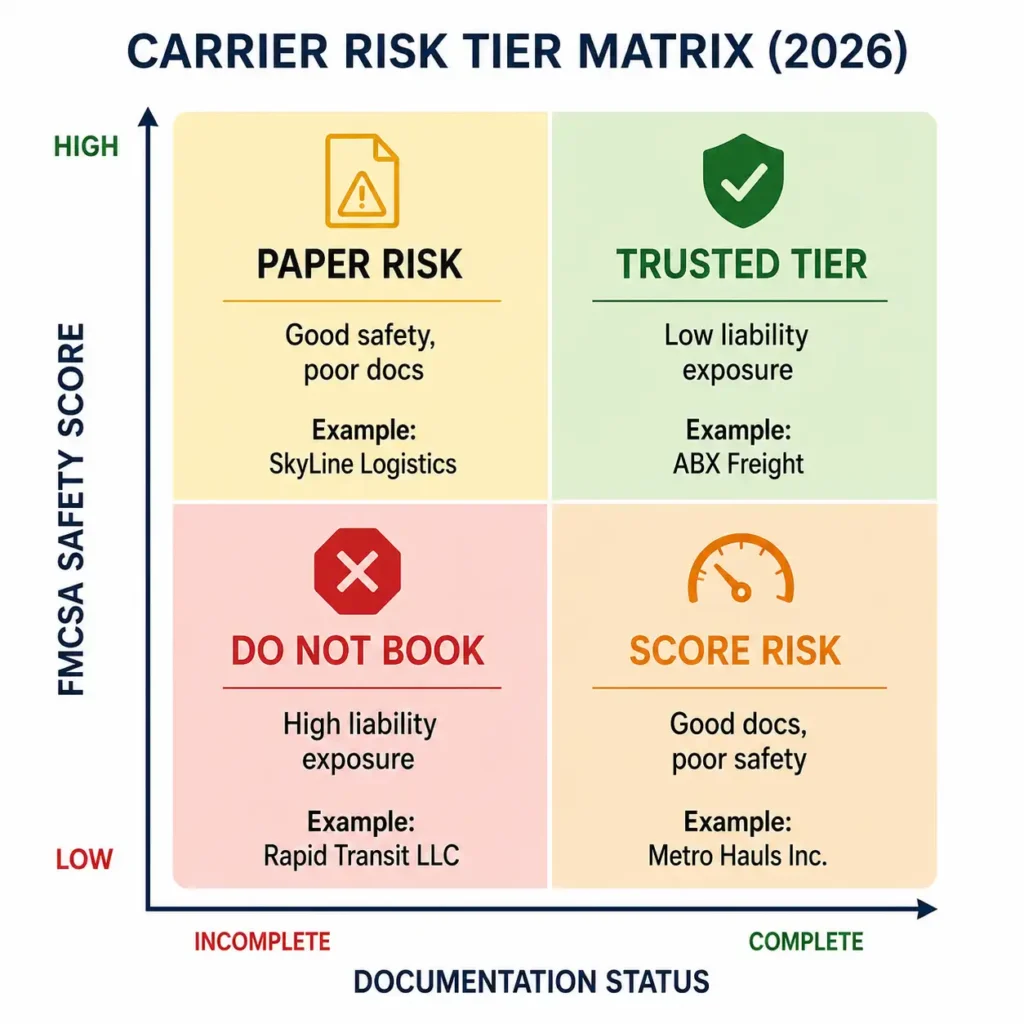
For carriers, this reinforces a positive trend. In some way, strict vetting can weed out shady players and improve rates for reputable fleets. As one analyst noted, carriers who can demonstrate clean, documented safety practices may actually win business away from carriers who cut corners. Brokers and shippers will want to show they only use “trusted” carriers, and your dispatch records are how you prove that trust.
Bottom Line and Dispatch Action Plan
The Supreme Court’s broker liability ruling didn’t outlaw brokers or slam the freight industry into chaos – but it did raise the bar. If you’re dispatching loads or running a box truck, hotshot, or heavy-duty operation, here’s how to turn this challenge into an opportunity:
- Treat carrier vetting as a core part of your dispatch workflow. Use checklists and fill them out every time.
- Invest a few minutes in paperwork after each pickup: scan invoices, save inspection photos, and update your files so they’re never far behind.
- Reach out to brokers proactively. If they see you’re organized, they’ll see you as lower risk.
- Consider working with a dispatch service (like Dispatch Republic) that has compliance systems built in. We can help manage your documentation, run FMCSA checks, and even coach you through improving safety metrics.
- Stay educated. Follow trucking news and FMCSA updates so you’re not caught off guard by the next rule.
Remember the goal is to show “reasonable care.” It’s not about being perfect; it’s about being conscientious. The more evidence you have of doing things right, the safer you’ll be if something goes wrong. And if you feel overwhelmed by all the new procedures, know that it’s also OK to ask for help. A professional dispatch partner can lend expertise on FMCSA rules and paperwork — freeing drivers to focus on the road, while knowing their compliance house is in order.
At Dispatch Republic, we’ve been tightening our vetting and onboarding processes for years, and we can help your operation do the same. We understand truck dispatch documentation inside and out, and our team keeps track of FMCSA safety data and vetting procedures so you don’t have to. If you want to ensure your paperwork and safety scores never hold you back from a load, reach out to us. Together, we’ll make sure your carriers are not only ready to roll but also bulletproof if anyone ever questions it.
If you’re an owner-operator hauling specialized freight, don’t go it alone. Explore Dispatch Republic’s reefer truck dispatch services and power only dispatch services to access top-paying loads and compliance support. Check out our car hauling dispatch services and blog for more tips. Our dispatchers are experts in car hauling loads, flatbed loads, and reefer loads – we can match your truck to the best freight and handle the paperwork. Let us help you keep your rig loaded, safe, and legal.
For a deeper dive into the truck business, read our Box Truck vs. Dry Van: Which Is Better for Your Business? and Step Deck vs. Flatbed: Which Is Right for Your Fleet?
Ready to make the most of your trucking business? 🚚💨 Reach out to Dispatch Republic and let our experts help maximize your earnings with tailored hotshot dispatch service and box truck dispatch service solutions. We’ll handle the logistics while you keep on truckin’. Contact our truck dispatch service to get started on the road to greater profits and less hassle!
For more detailed guides, check Dispatch Republic’s resources on dispatching and the trucking business. How Much Can a Box Truck Owner Operator Earn if you’re weighing career paths, and How Professional Hotshot Dispatchers Find Better Loads Than Most Drivers to understand the dispatch side of the business.
If you’re an owner-operator juggling multiple responsibilities, consider partnering with a professional truck dispatch service to take the load off your shoulders—literally. At Dispatch Republic, we specialize in helping carriers run smarter and earn more by expertly managing load boards, negotiating top rates, and handling paperwork for dry vans dispatch service, reefers dispatch service, flatbeds dispatch service, box trucks dispatch service, step decks dispatch service, hotshots dispatch service and even car hauler dispatch services. Our team monitors multiple premium load boards around the clock, ensuring your truck stays loaded with the right freight, at the right rate, on the right lane. Whether you’re scaling up or just getting started, having a dedicated dispatch team in your corner means fewer empty miles, less stress, and more time to focus on driving and growing your business.
Frequently Asked Questions
What is the Supreme Court’s broker liability ruling and how does it affect my trucking operations?
The Supreme Court’s decision in Montgomery v. Caribe Transport II (May 2026) removed federal immunity for brokers regarding safety-based claims. This means brokers can be sued under state law if they negligently choose an unsafe carrier. For you, this raises the importance of carrier vetting: brokers will scrutinize carriers’ safety histories and documentation more closely when assigning loads. If your operation is vetted properly (with current insurance, authority, and clean truck safety scores), you’ll have more leverage. If not, brokers may pass on your trucks to avoid risk. In short, the ruling forces everyone to pay attention to safety compliance at booking time.
What does effective carrier vetting involve and why is it important?
Carrier vetting means thoroughly verifying every trucking company before booking it a load. Key steps include confirming FMCSA operating authority, checking insurance coverage, reviewing FMCSA safety ratings and crash history, and ensuring compliance records are clean. It’s important because brokers must be able to prove they exercised “reasonable care” when picking a carrier. Without strong vetting, brokers (and by extension your loads) can be at risk of liability. For drivers, it means if you maintain a good record, brokers will have confidence to keep booking your loads.
What documents should a truck dispatcher have ready when working with a broker?
A dispatcher should keep all the standard truck dispatch documentation organized: a complete carrier packet (including MC Authority, USDOT #, and any W-9s and signed broker–carrier agreements); current insurance certificates (with at least $750K liability, though many brokers want $1M); and digital copies of recent bills of lading and rate confirmations. Also maintain driver qualification files and maintenance records. Having these ready shows brokers you’re compliant, and it makes vetting smoother. Missing paperwork can delay or even cancel load assignments under the new scrutiny.
How do truck safety scores influence whether carriers get loads?
Brokers increasingly view truck safety scores (the FMCSA CSA/SMS percentages) as a quick risk filter. Carriers with better (lower-percentile) safety scores are seen as safer bets for loads. After the court ruling, we expect brokers to direct high-paying loads to carriers in the top safety quartile, while carriers with multiple violations or high crash rates may struggle to get loads. Dispatchers can help by monitoring these scores and improving them: for example, coaching drivers on hours-of-service compliance, and quickly fixing any out-of-service issues. In practice, an excellent safety score can be as valuable as a good credit score.
How can a hotshot truck dispatch service or dispatch team help me with compliance and vetting?
A professional hotshot dispatch service (or dispatcher) acts as your operations manager. We will track expirations and requirements, run FMCSA safety checks on carriers, and prepare all the dispatch documentation needed. For instance, dispatchers can maintain a checklist for each new carrier and handle communication with brokers if questions arise. We also coordinate paperwork after pickups (like collecting PODs and inspections) so nothing is missing. In short, we shoulder the compliance load so you can focus on driving. This makes your operation look solid to brokers and helps ensure your loads keep rolling even in this tightened liability environment. Read more about How Freight Market Changes Affect Hotshot Truckers.
What should I do if a broker asks about my safety rating or compliance records?
Be ready with answers. If a broker inquires about safety, proactively share your CSA summary or a recent PrePass report. Have records like inspection certificates and maintenance logs at hand. Explain anything that might have raised a flag and show you corrected it. For compliance, mention the software or service you use to monitor filings. Demonstrating transparency and prompt record-keeping builds trust. If needed, involve your dispatcher: we can compile a clear response (for example, a written summary of your safety performance) to present as proof. Under the new broker liability standards, showing you’ve already “acted reasonably” goes a long way.
Ready to Take Your Trucking Career to the Next Level?
Whether you’re an owner-operator, a company driver, or a carrier company in need of truck dispatch services, Dispatch Republic is here to help. Our team of experienced truck dispatchers offers affordable, professional truck dispatch solutions designed to save you time, increase your earnings, and make your business more efficient.
Thinking about outsourcing your truck dispatching? Contact Dispatch Republic today and move smarter, not harder.
Found our Blog useful? Spread the word:
Check our latest posts:


Contact us today to see how our team can support your trucking business.